
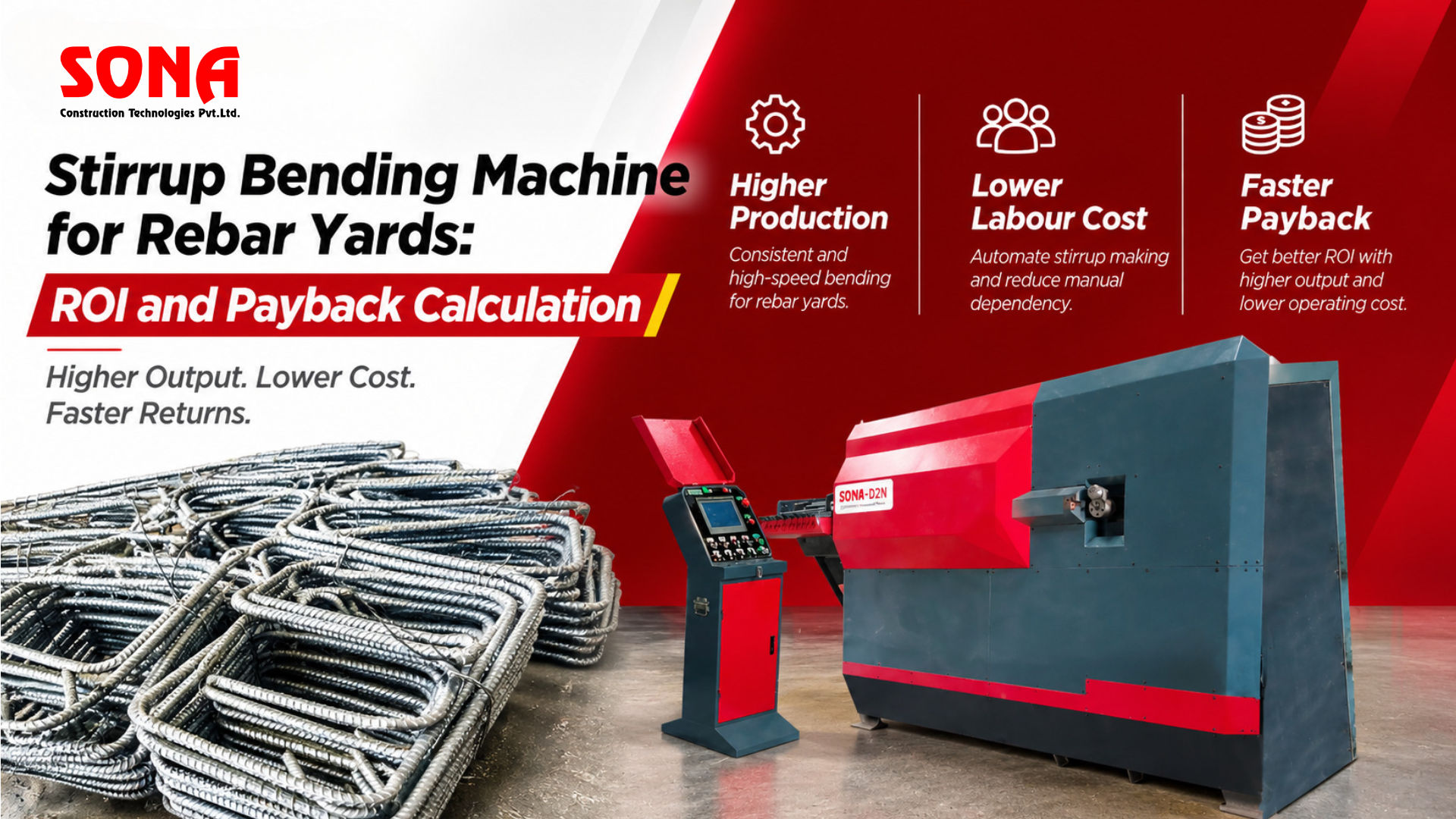
Is manual stirrup production eating into your rebar yard's profit?
If your business regularly supplies TMT rings and stirrups to construction sites, labour costs, production speed and order volumes directly affect your margins.
Manual bending may seem economical because it requires less initial investment. But what happens when orders increase, workers become unavailable or delivery deadlines get tighter?
An automatic stirrup bending machine can change the economics of your rebar yard.
Let's look at the numbers.
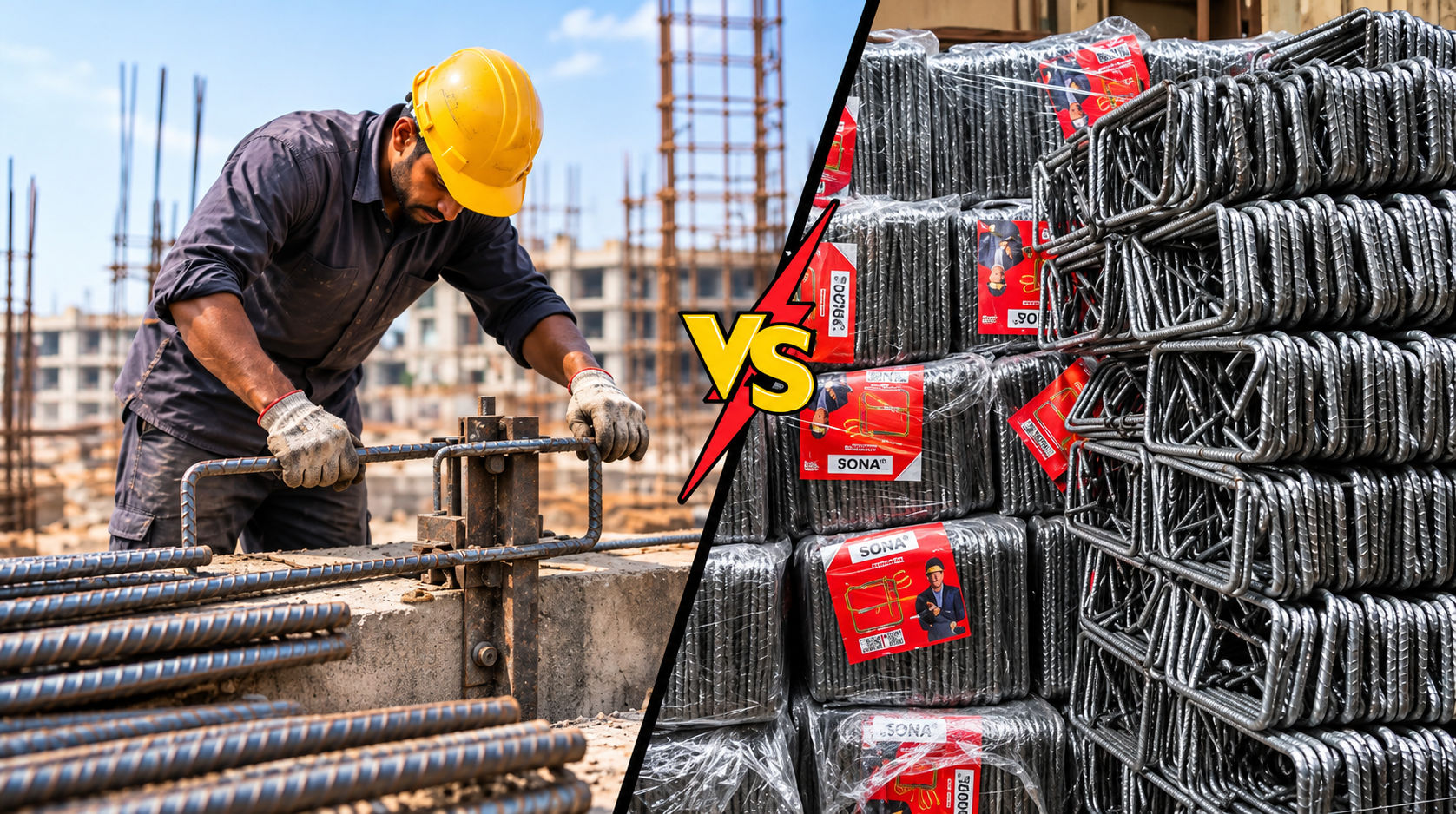
Consider a rebar yard producing stirrups regularly.
With manual production, you are paying for:
With an automatic CNC stirrup bending machine, several repetitive operations can be automated.
The business advantage: More controlled production, reduced manual intervention and better utilisation of your workforce.
Let's take a practical example.
Assume your rebar yard invests in an automatic stirrup bending machine.
Illustrative investment and operating assumptions:
| Particulars | Amount |
|---|---|
| Machine investment | ₹10,00,000 |
| Installation and setup | ₹50,000 |
| Total investment | ₹10,50,000 |
Estimated monthly financial benefits:
| Particulars | Monthly Amount |
|---|---|
| Labour savings | ₹36,000 |
| Reduced rework and wastage | ₹12,000 |
| Additional production contribution | ₹33,000 |
| Additional electricity and maintenance | -₹12,000 |
| Net monthly benefit | ₹69,000 |
Your Payback Calculation
Total Investment ÷ Monthly Net Benefit
₹10,50,000 ÷ ₹69,000 = 15.2 Months
Under these assumptions, the machine investment can be recovered in approximately 15 months.
Note: These are illustrative figures, not a SONA quotation or guaranteed savings. Actual ROI depends on machine utilisation, order volume, labour costs and operating expenses.
A cheaper machine is not necessarily a more profitable machine.
Before purchasing, compare:
For a rebar yard, the real question is not simply how much a machine costs.
It is how much usable production it can deliver against your investment.
SONA offers automatic stirrup bending solutions for different reinforcement processing requirements.
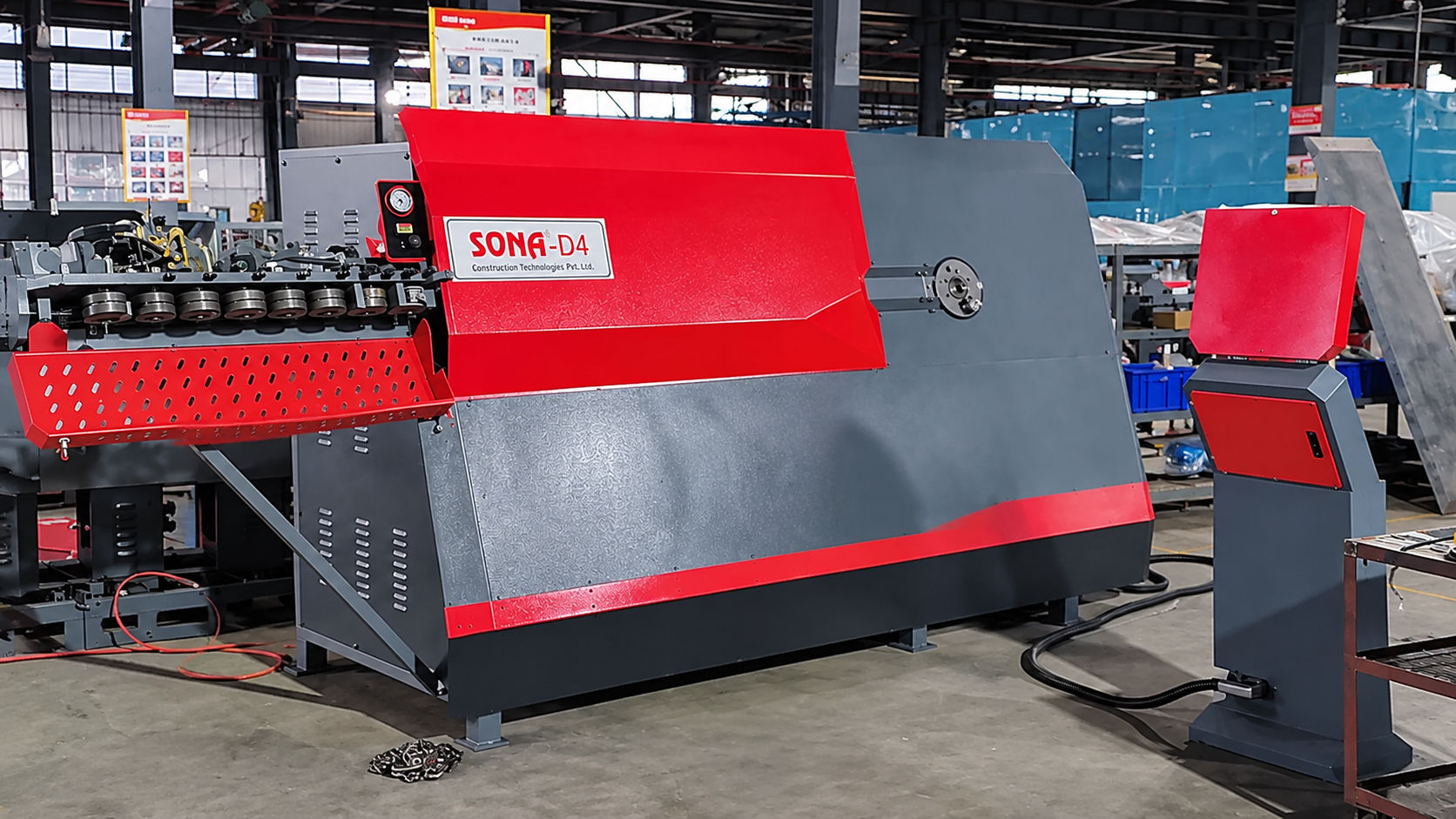
Designed for automated stirrup production.
Suitable for businesses looking to automate regular stirrup production.
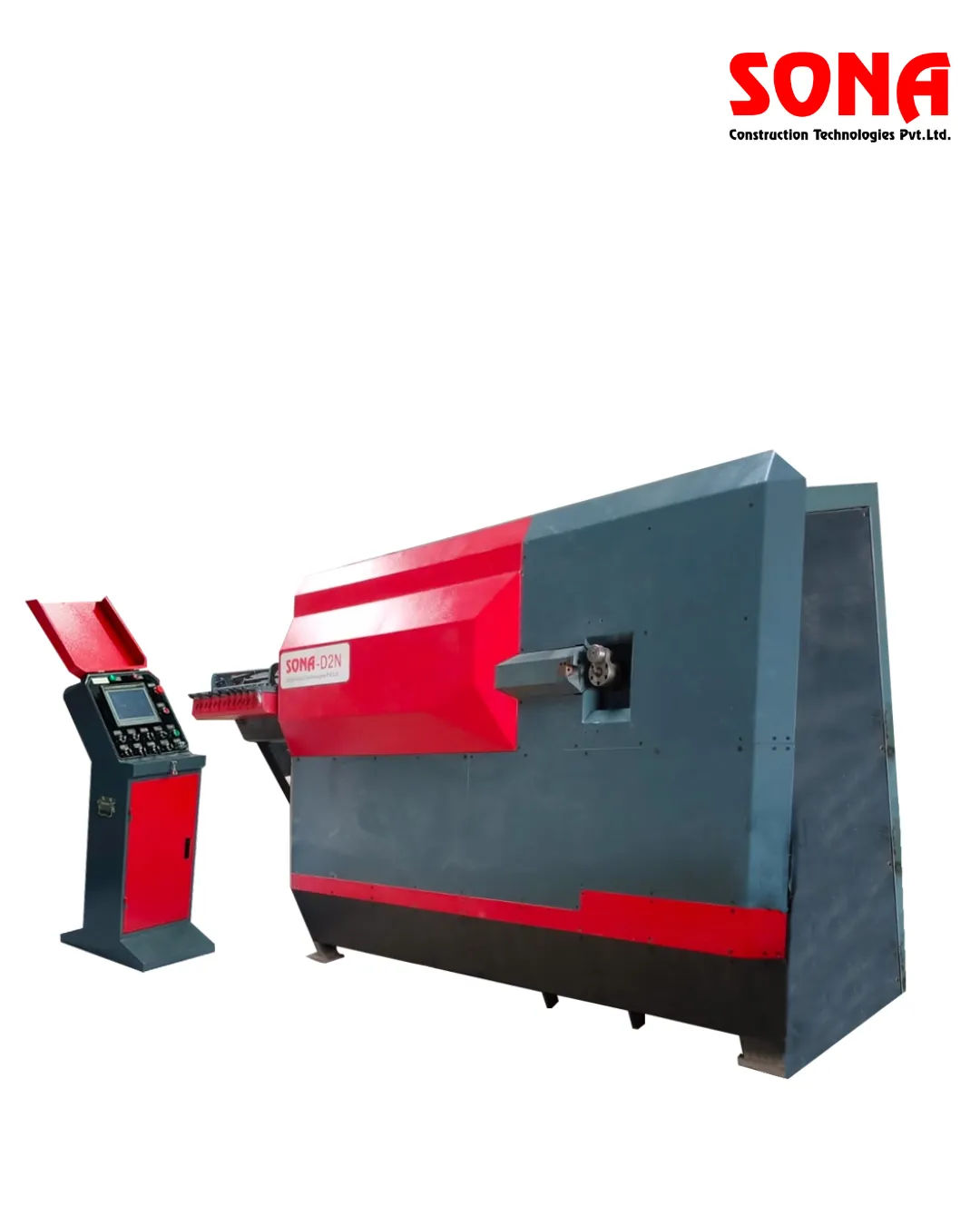
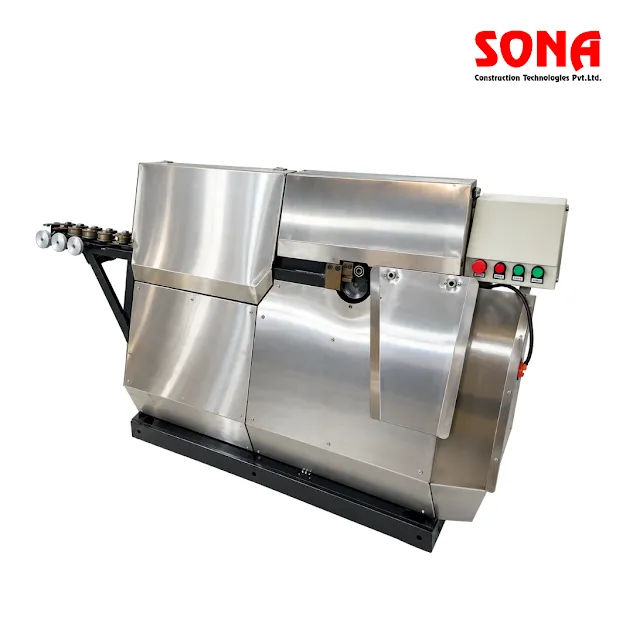
Designed for higher-volume CNC ring production.
Suitable for businesses targeting higher production volumes and greater automation.
Actual output depends on steel diameter, ring dimensions, shape and operating conditions.
Before purchasing an automatic stirrup bending machine, calculate:
These three calculations can help you identify whether automation makes financial sense for your business.
For a growing rebar yard, an automatic stirrup bending machine is more than a piece of equipment. It is a production investment.
The right machine can help reduce labour dependency, improve output consistency and handle larger orders with better production planning.
Planning to automate your rebar yard?
Explore SONA D1 and D2N automatic stirrup bending machines.
Contact SONA Construction Technologies for specifications, pricing and machine selection assistance.
1. How do I calculate the ROI of a stirrup bending machine?
Subtract additional monthly operating expenses from labour savings, rework savings and additional production contribution. Divide the total machine investment by this monthly net benefit to calculate the payback period.
2. Is an automatic stirrup bending machine profitable for a rebar yard?
It can be profitable for businesses with regular stirrup orders, sufficient machine utilization and measurable labour or production savings.
3. What is the production capacity of SONA stirrup bending machines?
The SONA D1 offers approximately 2.5–6 MT/day production capacity, while the D2N advertises 1,500+ rings/hour. Actual output varies with operating conditions and product dimensions.
4. Should I choose D1 or D2N?
Choose based on steel diameter, production volume, required ring dimensions and automation requirements. Consult SONA for application-specific recommendations.
Stirrup Bending Machine for Rebar Yards: Calculate Your ROI and Payback Period
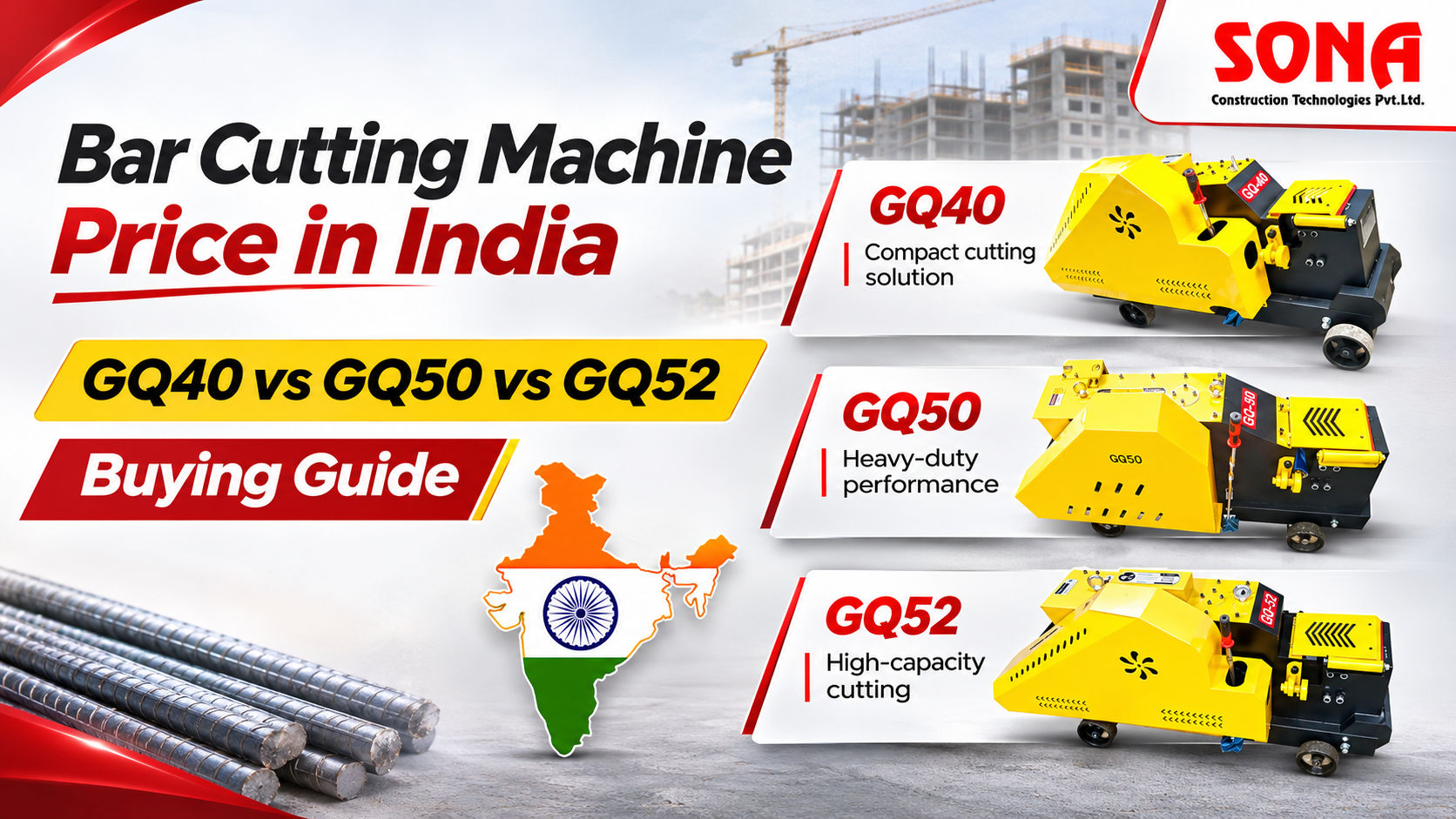
Bar Cutting Machine Price in India: GQ40 vs GQ50 vs GQ52 Buying Guide
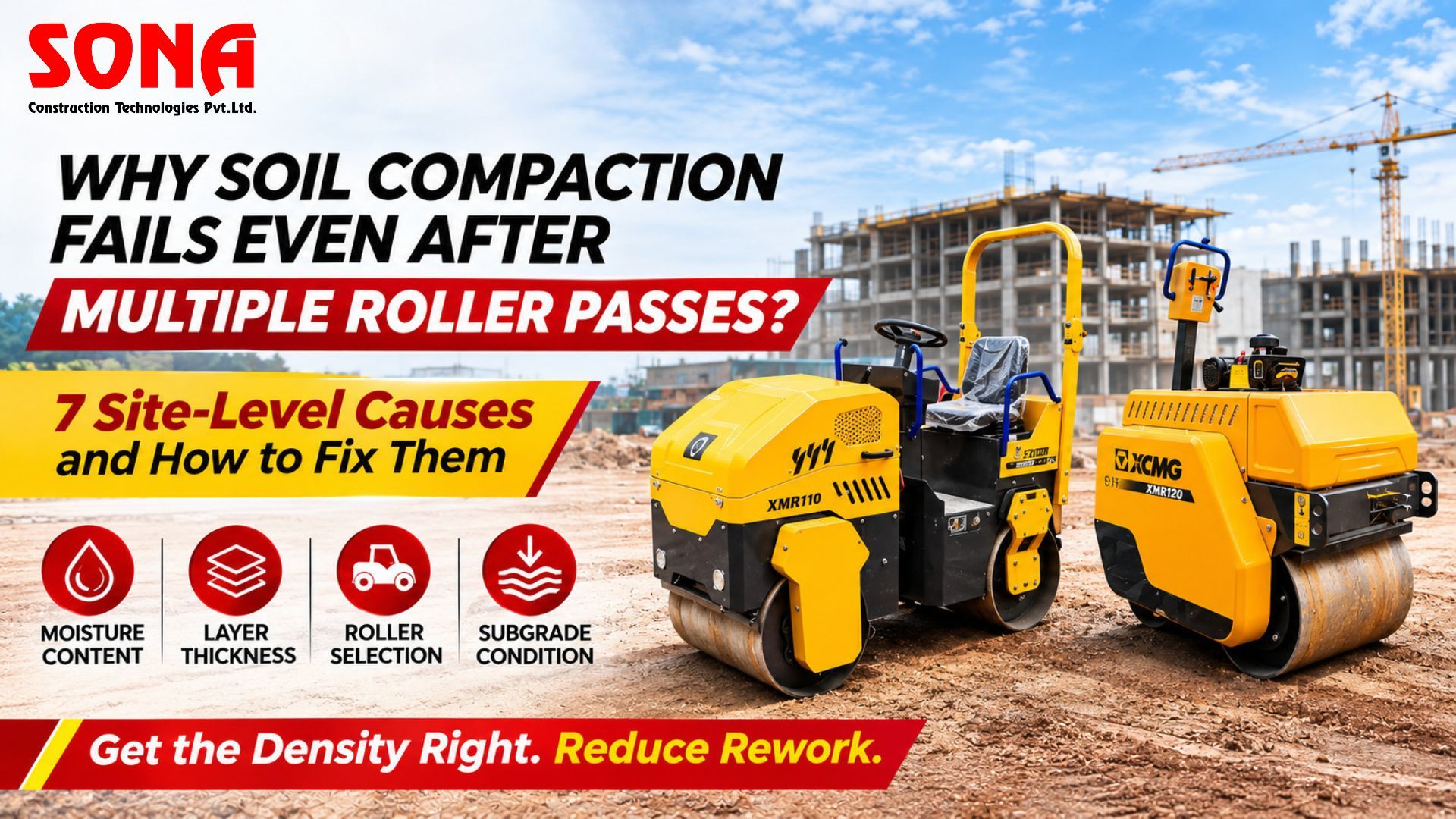
Why Soil Compaction Fails Even After Multiple Roller Passes: 7 Site-Level Causes and How to Fix Them

Field Density Test (FDT): Methods, Procedure & Calculation

India’s Infrastructure Push Is Driving Demand for Construction Machinery, but the Ground Reality Is More Complex

Copyright © 2026 Sona Construction Technologies Private Limited