
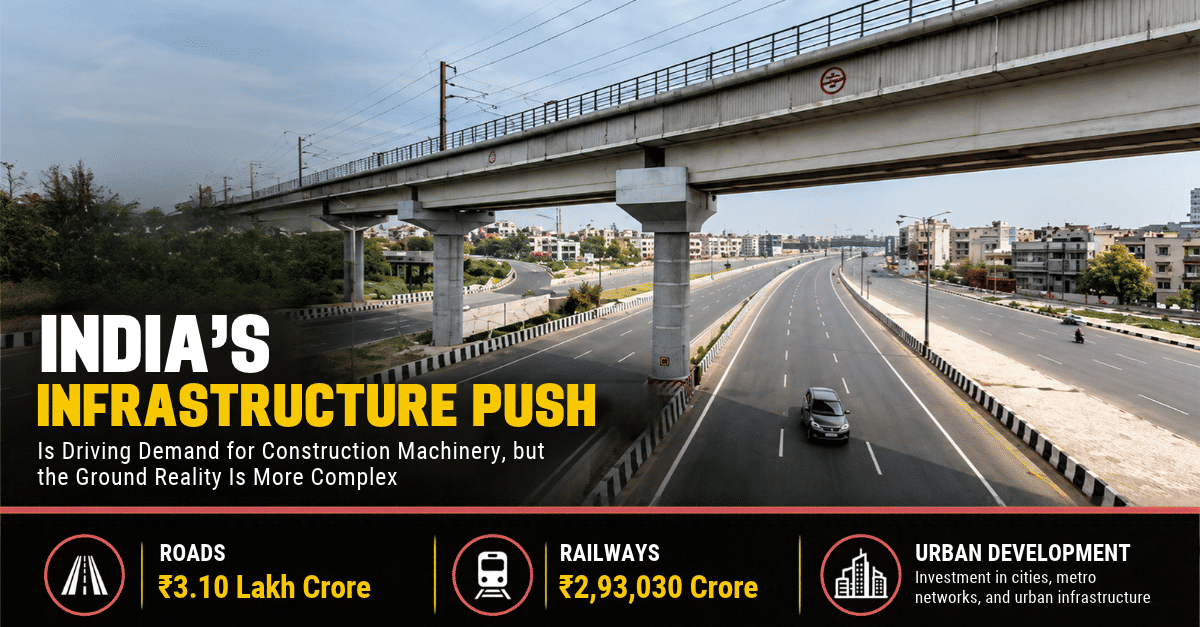
India’s construction equipment industry is entering a crucial phase. The government is spending record amounts on roads, railways and cities, but machine sales have not yet caught up with the plans.
Every big project in India starts the same way, with excavators digging, loaders moving soil and rollers flattening the road. So when the government announces more money for infrastructure, the first to feel it should be the construction machinery industry. This year, the picture is a little more interesting than that.
In the Union Budget 2026-27, the government raised its capital spending to a record ₹12.2 lakh crore, up from ₹11.2 lakh crore the year before. This marks the 11th year in a row of higher public investment.
A large share of this money is headed to the sectors that need machines the most. The roads ministry has been given about ₹3.10 lakh crore. Indian Railways received its highest-ever capital allocation of ₹2,93,030 crore. Metro projects and urban development have also received a strong push, which means more digging, piling, lifting and concrete work in Indian cities.
Not every sector creates the same demand for equipment. According to CRISIL, roads account for about 40% of construction equipment demand, followed by mining at 25% and real estate at 15%. This is why highway construction is watched so closely by dealers, manufacturers and contractors. When highway work speeds up, machine sales usually follow.
If budgets alone decided sales, FY26 should have been a great year. It was not. Total construction equipment sales dipped about 2% to 1,36,995 units, according to industry body ICEMA. The decline was sharper in India’s own market, where domestic sales fell around 7%.
The reason was not a lack of money. ICEMA said national highway construction hit a seven-year low because of delays in land acquisition and fewer project awards. In simple words, the funds were ready, but many projects had not started on the ground. ICEMA’s president also said that the dip should be seen as a result of slower project execution, not as a structural weakness in the industry.
There were some bright spots. Exports of Indian-made construction equipment jumped about 31.5% in FY26, showing that global buyers are choosing machines made in India. Road construction equipment also grew about 6.3% to 7,445 units. By March 2026, overall sales were up 6% from a year earlier, a sign that recovery was beginning.
Industry leaders are optimistic. India is already the world’s third-largest construction equipment market, valued at around $10 billion, and it is projected to reach $14.76 billion by 2030. The Budget also gave the sector another boost. It announced a dedicated incentive scheme for construction and infrastructure equipment manufacturing, something the industry had asked for over a long time.
The takeaway for contractors, dealers and investors is simple. Budget announcements show where the money is going, but project awards and actual site work decide when machines get sold. As more highway, rail and metro projects move from paper to ground, demand for construction machinery is expected to pick up.
India’s infrastructure pipeline is long and well funded. The next few months will show how quickly it turns into real work on site, and into orders for the machines that do it.
India’s Infrastructure Push Is Driving Demand for Construction Machinery, but the Ground Reality Is More Complex

Soil vs Asphalt Compaction: 7 Practical Differences Every Site Engineer Should Know
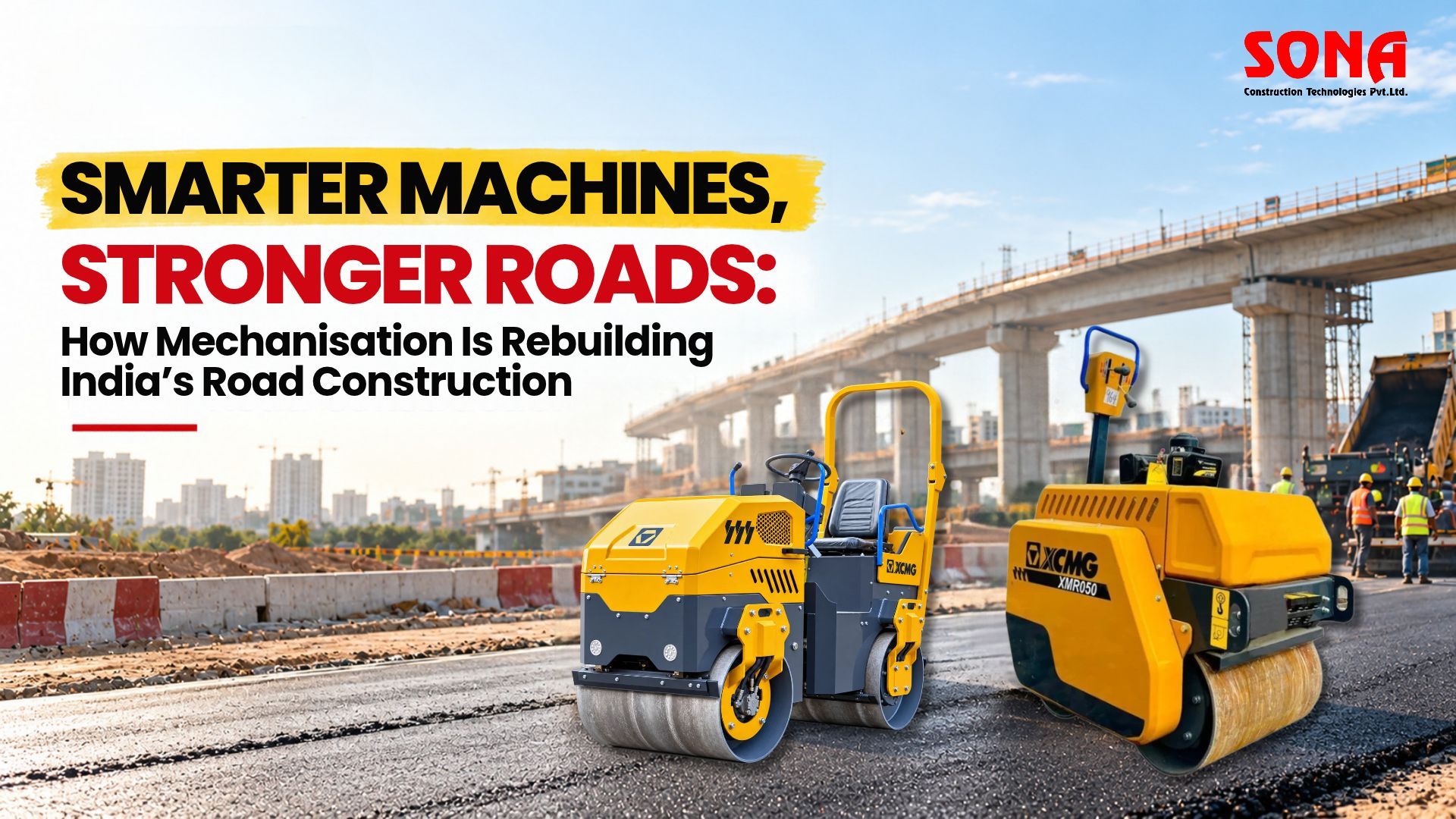
Smarter Machines, Stronger Roads: How Mechanisation Is Rebuilding India’s Road Construction
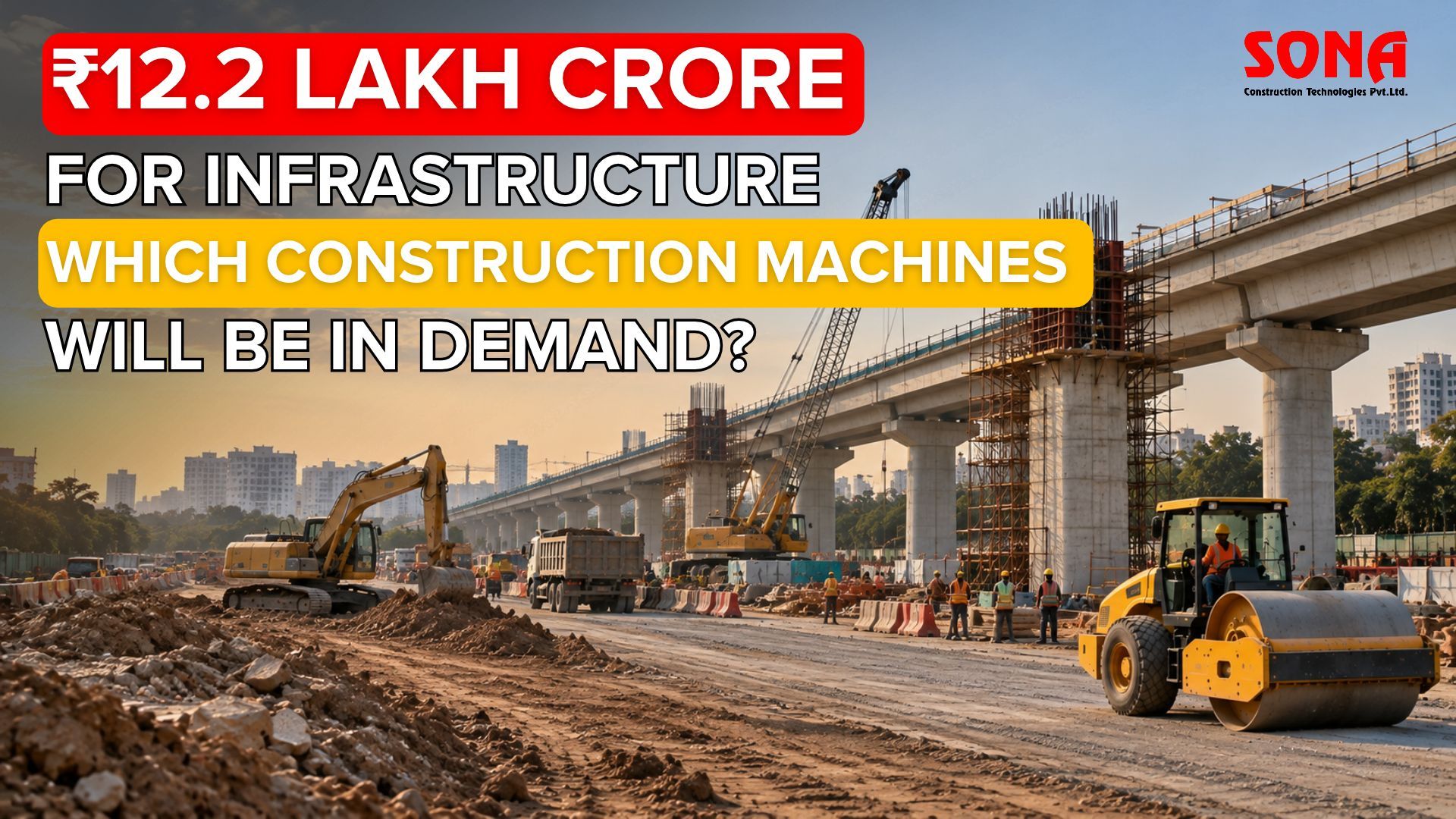
₹12.2 Lakh Crore for Infrastructure: Which Construction Machines Will Be in Demand?

SONA at ACE TECH Bengaluru 2026: Construction Equipment Showcase Recap

Copyright © 2026 Sona Construction Technologies Private Limited