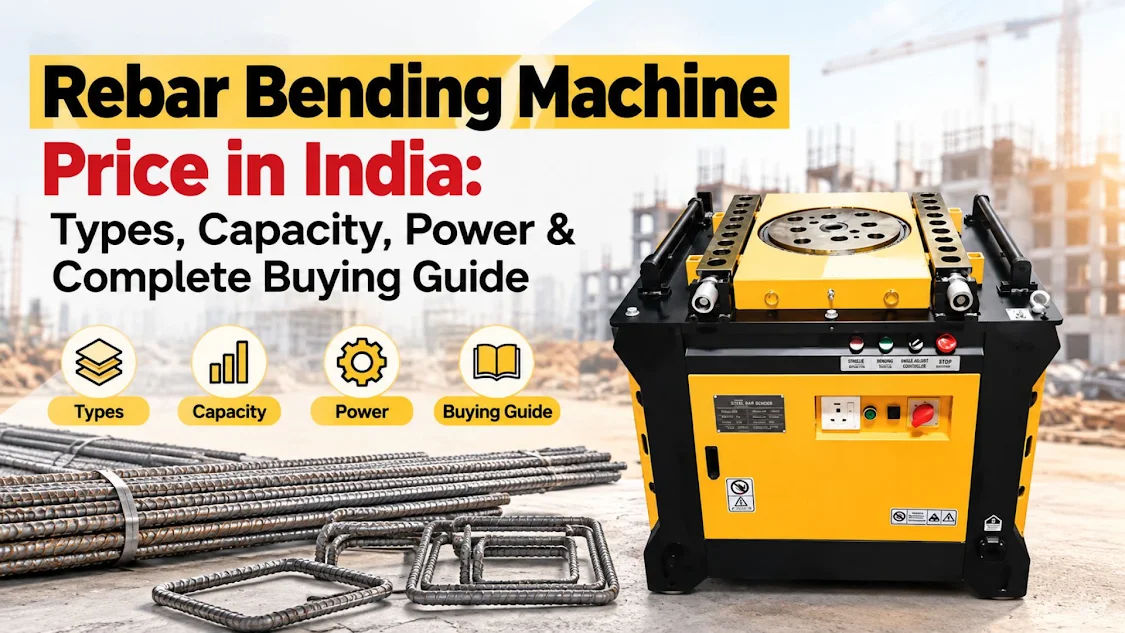
If you've started shopping for a rebar bending machine, you've probably noticed something frustrating already — every supplier quotes a different price, and half the listings just say "Get Best Price" instead of an actual number. So how much should you really pay?
The honest answer: it depends on what you're bending, how often, and how automated you want the process to be. In this guide, we'll break down every type of rebar bending machine sold in India, what they cost, what power they need, and how to pick the right one without overspending or under-buying.
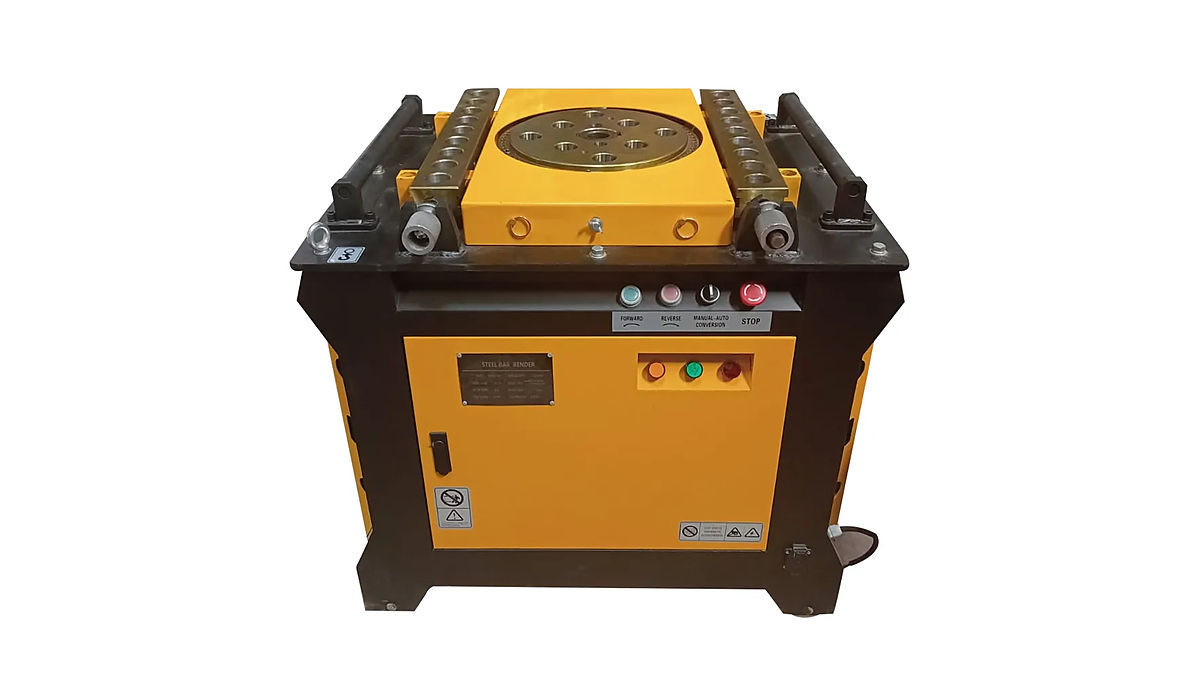
A rebar bending machine (also called a bar bending machine or bar bender) is used to bend TMT steel bars into the angles and shapes needed for concrete reinforcement — stirrups, hooks, rings, and custom bends for beams, columns, and slabs. Instead of bending bars by hand with a lever (slow, tiring, and inconsistent), the machine does it mechanically, hydraulically, or electronically at a fixed angle and speed.
Any RCC construction — homes, commercial buildings, bridges, roads — needs bent rebar at some stage. That's why this one machine shows up on nearly every construction site in the country.
Not every site needs the same machine. Here's how the four common types differ:
Operated entirely by hand using a lever or handle. No electricity needed at all.
Runs on an electric motor but still needs an operator to set the angle and feed the bar manually or with a foot pedal.
Uses hydraulic pressure to bend thicker bars quickly and consistently, often with programmable angle settings.
Computer-controlled machines that can straighten, cut, and bend rebar automatically in one continuous process.
| Type | Bending Capacity | Power Requirement | Typical Price Range (India) | Best For |
|---|---|---|---|---|
| Manual | 6mm – 16mm | None (hand-operated) | ₹15,000 – ₹50,000 | Home builders, small repair jobs |
| Semi-Automatic Electric | 6mm – 32mm | 3–5 HP, single or 3-phase | ₹65,000 – ₹1,50,000 | Small–medium contractors |
| Fully Automatic Hydraulic | 6mm – 40mm | 4–6 HP, 3-phase (380–415V) | ₹1,50,000 – ₹3,50,000 | Large contractors, precast units |
| CNC / Industrial | 10mm – 50mm | 4–10 HP+, industrial 3-phase | ₹3,50,000 – ₹10,00,000+ | Rebar processing plants, infrastructure projects |
Note: These are indicative ranges based on current market listings from Indian manufacturers and suppliers. Actual quotes will vary by brand, warranty terms, and city — always ask for a written quote before paying an advance.
Two machines that look identical on paper can be priced ₹30,000–₹50,000 apart. Here's why:
Before you finalize a machine, run through this checklist:
Once you've decided on the type and capacity, the brand is what determines build quality, spare-part availability, and how easily you can get it serviced. Here are some names you'll commonly come across while sourcing:
.jpg)
Maker of the SONA GW42 and GW52 rebar bending machines, popular for their 6–32mm and 6–40mm capacity ranges with 3.7–4 kW motors. A go-to option if you're comparing GW-series machines across brands.
.jpg)
A Kolkata-based manufacturer known for its B-series machines (B-40, B-42, B-55), including TMT rebar bending machines rated around 4.5 kW/6 HP. A solid pick if you need heavier-duty machines built for continuous, high-volume use.

One of the largest and most established names in this space, with over 3,000 bar bending and cutting machines sold on-site every year and 40+ years in the construction equipment business. A safe choice if service network and scale matter to you.
Part of the larger Rajat Group, MKG makes bar bending and cutting machines alongside hydraulic rebar straightening-bending machines, plastering machines, and other light construction equipment — useful if you're sourcing multiple machine types from one manufacturer.
_8kl0zk7Ao.jpg)
Offers bar cutting and bending machines in 42, 52, and 55 models, with a service and spares network across Bangalore, Chennai, Hyderabad, Mumbai, and Vijayawada, and active expansion into more cities.
A Vadodara-based manufacturer with decades of experience in construction equipment (bar bending/cutting machines, hoists, concrete mixers), known for compact, low-maintenance designs and an export presence beyond India.
A basic manual rebar bending machine starts around ₹15,000–₹20,000, while entry-level electric models start around ₹65,000.
Manual machines suit small, occasional jobs and tight budgets. Automatic machines suit contractors who bend rebar daily and need speed and consistency — the extra cost pays for itself in labour savings over time.
It depends on the type. Manual machines need no power. Semi-automatic electric machines typically run on 3–5 HP motors, while fully automatic and hydraulic machines usually need a 3-phase connection (380–415V) and 4–6 HP or higher.
Standard machines handle 6mm to 40mm bars. Industrial CNC machines can go up to 50mm or more.
A used machine is cheaper upfront but comes without a fresh warranty. For frequent, heavy-duty use, a new machine is usually the safer long-term investment.
There's no single "right price" for a rebar bending machine — the right machine is the one that matches your bar diameter range, your daily volume, and your site's power setup. Use the comparison table above as your starting point, get quotes from at least a few verified sellers, and don't let a low price tag distract you from checking warranty and service support. That decision will matter far more once the machine is running every day on-site.
.jpg?updatedAt=1792230595960)
₹12.2 Lakh Crore for Infrastructure: Which Construction Machines Will Be in Demand?
.png)
SONA at ACE TECH Bengaluru 2026: Construction Equipment Showcase Recap
.png)
Bar Bending Schedule (BBS) Using Excel in 2026
.jpg)
Grades of Concrete (M5 to M80): Uses, Strength and How to Compact Each Grade Properly
Automatic Stirrup Bending Machine: Complete Price & Buying Guide (India)

Copyright © 2026 Sona Construction Technologies Private Limited