
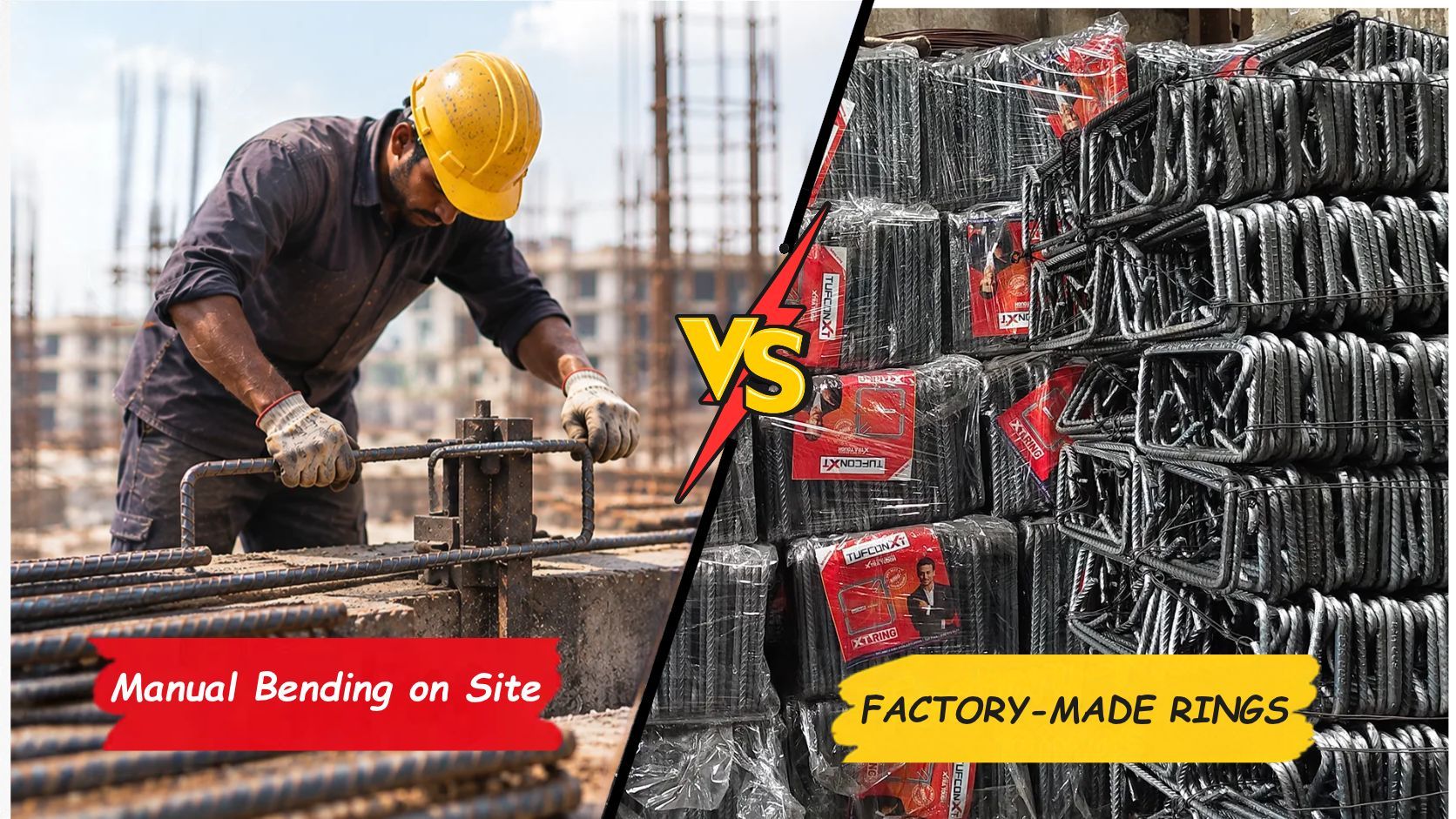
Walk onto any construction site and you'll spot them almost instantly — small, closed loops of steel wrapped around the vertical rods inside columns and beams. These are stirrups, and while they're easy to overlook next to the bigger, longer reinforcement bars, they quietly do some of the most important structural work in the entire building.
There are only two real ways to produce a stirrup: bend it manually at the construction site, or have it machine-bent in a factory as a ready-made TMT ring. Which method a project uses affects everything from budget and timeline to how safely the building performs during an earthquake.
This guide breaks down both methods in plain language, compares them honestly, and gives you everything you'd need to make an informed decision — whether you're a contractor, site engineer, or just someone trying to understand what's holding a building together.
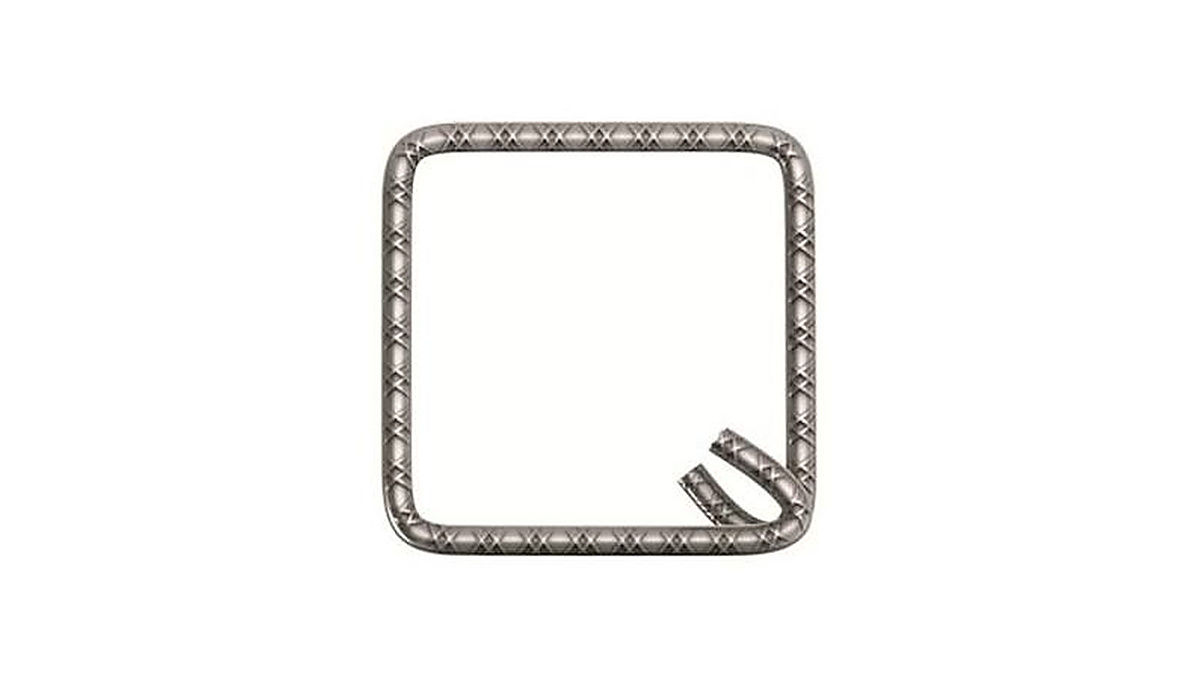
Picture the steel skeleton inside a concrete column or beam. Long, straight TMT (Thermo-Mechanically Treated) bars run the length of the structure, carrying most of the load. But straight bars alone aren't enough — they need something to hold them together, keep them properly spaced, and resist forces that act sideways rather than lengthwise.
That's the stirrup's job. It's a closed loop of steel — square, rectangular, or occasionally circular — that wraps around the main bars like a cage. Without it, a column or beam would be structurally incomplete, no matter how strong the main bars are.
Stirrups do three critical jobs:
Get any of these wrong — angle, spacing, dimensions — and all three protections weaken at once. This is exactly why how a stirrup is made matters just as much as the fact that it exists.
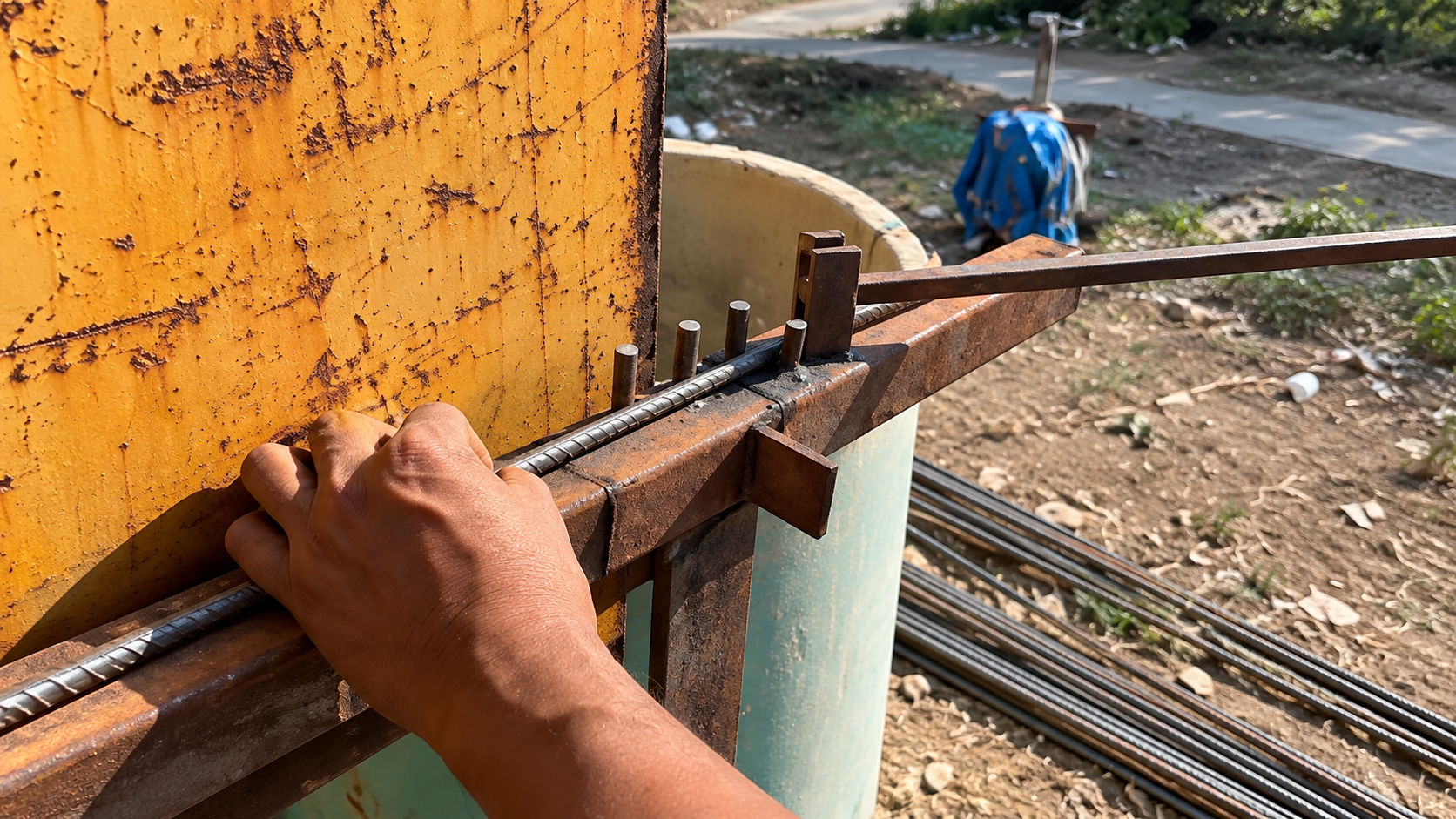
Manual bending is the traditional approach still used on a large share of projects today. Workers cut TMT bars to length and bend them into loops using hand tools or a basic manual bending jig, directly on-site.
Advantages:
Limitations:
Manual bending isn't inherently "bad." For small jobs, remote sites, or projects with unpredictable design changes, it still has a place. But its biggest weakness is consistency — and consistency is exactly what structural safety depends on.
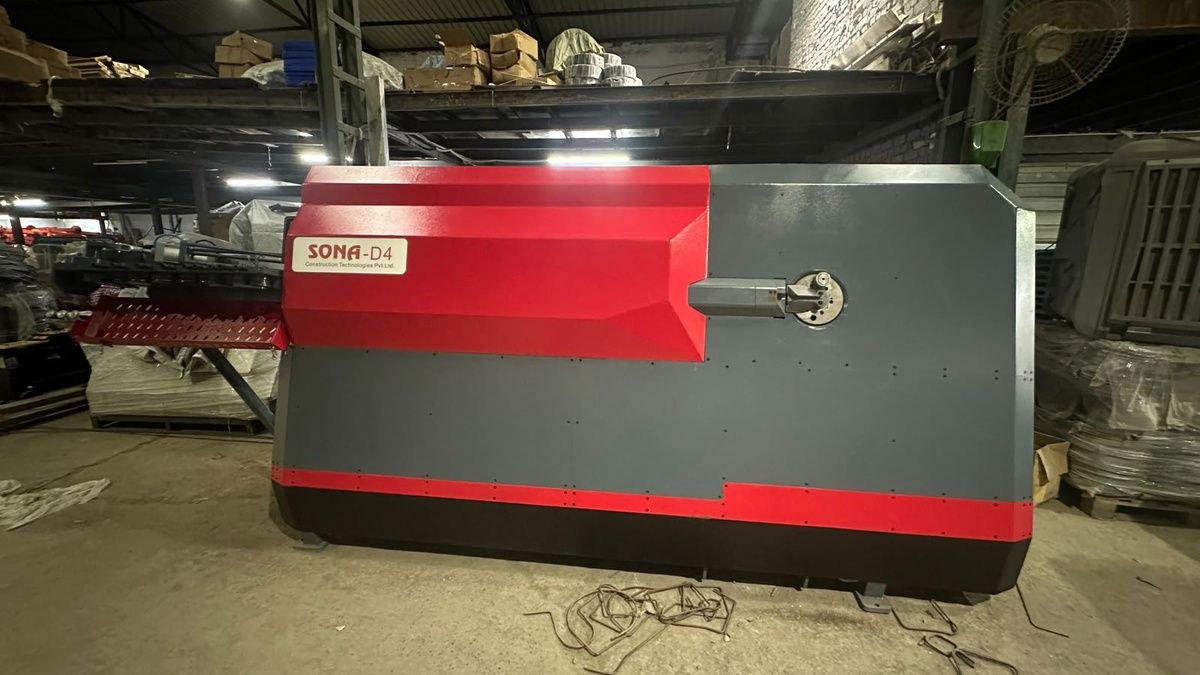
Machine bending happens off-site, in a controlled factory environment. TMT steel is fed into automated cutting and bending machines that produce TMT rings — stirrups that arrive at the site fully formed, sized, and ready to install. No cutting, no manual bending, no on-site fabrication.
Advantages:
Limitations:
| Factor | Manual Bending | Machine Bending (TMT Rings) |
|---|---|---|
| Dimensional accuracy | Varies by worker skill | Consistent, machine-precise |
| 135° hook compliance (IS 13920) | Often inconsistent | Exact every time |
| Labor time | High | Minimal |
| Material wastage | Higher | Near-zero |
| Structural reliability | Dependent on technique | Standardized and tested |
| Upfront cost per piece | Lower | Slightly higher |
| Lead time / flexibility | Immediate, on-site | Requires advance ordering |
This is where a lot of budgeting goes wrong. Manual bending looks cheaper because there's no supplier markup — you're only paying for labor and raw steel. But that comparison ignores the hidden costs: wasted material from cutting errors, hours spent redoing inconsistent bends, and the sheer labor time required at scale.
Machine-bent TMT rings cost more per piece, but they eliminate rework, cut labor hours dramatically, and shorten project timelines. On most mid-to-large projects, when you account for total cost — not just sticker price per stirrup — machine bending frequently comes out ahead.
The right call still depends on project size. A small residential job with a handful of columns may not see enough volume to justify factory ordering. A multi-storey commercial or infrastructure project almost always will.
If you're specifying or ordering factory-made stirrups, confirm these details before placing an order:
Several variables move the price of factory-made stirrups:
Because pricing shifts with steel market rates, location, and supplier, it's best to request a direct quote based on your exact specifications rather than relying on a fixed number.
There's no single universal answer, but a simple rule of thumb helps:
Both methods produce the same functional part. But only one of them removes human variability from a component that directly affects earthquake safety — and for most modern construction, that trade-off increasingly favors machine bending.
Manual bending happens by hand or with basic tools on-site; machine bending happens in a factory using automated equipment, producing ready-to-install TMT rings with precise, code-compliant dimensions.
It offers better accuracy, consistent hook angles, and less labor time, but costs more per piece and requires advance ordering. Small or highly custom jobs may still suit manual bending better.
IS 2502, IS 456, and IS 13920 — the last one specifically governs the 135° seismic hook requirement.
Match the outer dimensions to your column or beam design (common sizes: 7"×7", 7"×9", 8"×8"), and confirm bar diameter and hook length against your structural drawings.
Yes — automated cutting virtually eliminates the material loss that comes from manual measuring and cutting errors.
.jpg?updatedAt=1792230595960)
₹12.2 Lakh Crore for Infrastructure: Which Construction Machines Will Be in Demand?
.png)
SONA at ACE TECH Bengaluru 2026: Construction Equipment Showcase Recap
.png)
Bar Bending Schedule (BBS) Using Excel in 2026
.jpg)
Grades of Concrete (M5 to M80): Uses, Strength and How to Compact Each Grade Properly
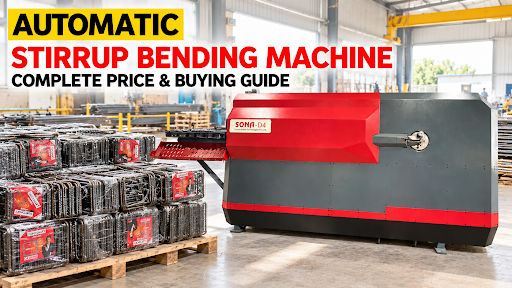
Automatic Stirrup Bending Machine: Complete Price & Buying Guide (India)

Copyright © 2026 Sona Construction Technologies Private Limited