

.png)

Sona Construction Technologies Pvt Ltd

27-03-2026

If you are building a house or commercial property in India — whether in a metro, a Tier 2 city, or a rural township — one of the first and most important decisions your structural engineer will raise is this: Load bearing structure or RCC frame structure — which is right for your project? This single decision affects your construction cost, floor space efficiency, earthquake safety, future expansion capability, and long-term property value. Whether you are a homeowner planning a G+1 house in Nagpur or a developer building a multi-storey complex in Hyderabad, this guide gives you a complete, no-confusion breakdown based on Indian codes, real costs, and ground-level practice.
A load bearing structure is a traditional construction system in which the walls are the primary structural elements. Every load — from the slab, the floor above, the roof, and the occupants — is transferred downward through the walls directly to the foundation.
The load path in a load bearing system is:
• Roof/Slab load → Transferred directly to the wall below
• Wall carries combined dead load + live load + self-weight
• Load passes from upper walls to lower walls (increasing at each floor)
• Foundation (typically strip footing as per IS 1080:1985) receives and distributes to soil
Because walls carry all the load, they must be thicker at lower floors. Brick walls of 230 mm are standard at upper floors, often increasing to 345 mm or 450 mm at ground level for multi-floor structures.
• G+1 and G+2 residential houses in Tier 2 and Tier 3 cities
• Rural housing under PMAY (Pradhan Mantri Awas Yojana) — low-cost housing schemes
• Traditional construction in states like Rajasthan, Himachal Pradesh, and parts of UP
• Small commercial structures in low seismic zones
Load bearing structures are typically limited to G+2 or G+3 (up to 4 floors) under normal conditions in India. However, this limit is significantly constrained by seismic zone:
| Seismic Zone (IS 1893:2016) | Zone Description | Load Bearing Recommendation |
|---|---|---|
| Zone II | Low seismic risk | Permitted up to G+3 with IS 1905 compliance |
| Zone III | Moderate seismic risk | G+1 maximum; avoid for new construction |
| Zone IV | High seismic risk (Delhi, Jammu) | Not recommended |
| Zone V | Very high seismic risk (NE India, Himalayas) | Strictly prohibited |
.png)
An RCC (Reinforced Cement Concrete) frame structure is a modern structural system where the load-carrying skeleton consists of columns, beams, and slabs made of reinforced concrete. Walls in this system are non-structural — they are simply partition or cladding elements and carry no vertical structural load.
The load path in an RCC frame structure is:
• Floor/roof load → Slab → Beams
• Beams transfer load → Columns
• Columns carry cumulative load → Foundation (isolated/combined/raft/pile)
• Foundation distributes to the soil safely
This load path distributes forces efficiently across multiple structural members, preventing stress concentration and providing redundancy in the system.
| IS Code | Scope | Application |
|---|---|---|
| IS 456:2000 | Plain and Reinforced Concrete — Code of Practice | Design of all RCC elements |
| IS 13920:2016 | Ductile Detailing of RC Structures for Seismic Forces | Mandatory in Zone III, IV, V |
| IS 1893:2016 Part 1 | Criteria for Earthquake Resistant Design | Seismic load calculations |
| IS 875:1987 (Parts 1-3) | Code of Practice for Design Loads | Dead, live, wind load design |
| NBC 2016 | National Building Code of India | General structural system guidance |
.png)
| Aspect | Load Bearing Structure | RCC Frame Structure |
|---|---|---|
| Primary Load-Carrying Element | Walls (masonry) | Columns and Beams (RCC) |
| Load Path | Slab → Wall → Foundation | Slab → Beam → Column → Foundation |
| Governing IS Code | IS 1905:1987 | IS 456:2000, IS 13920:2016 |
| Foundation Type | Strip footing (IS 1080) | Isolated / Raft / Pile (IS 2911) |
| Max Practical Height (India) | G+3 in Zone II only | No practical limit |
| Seismic Resistance | Poor — rigid, brittle failure | Good — ductile, energy-dissipating |
| Design Flexibility | Very low — walls are fixed | High — non-structural walls |
| Carpet Area Efficiency | Reduced (thick structural walls) | Better (thinner partition walls) |
| Approx. Cost India (2026) | Rs 1,200–1,600/sq ft | Rs 1,600–2,200/sq ft |
| Future Vertical Expansion | Difficult to impossible | Feasible with planning |
| Suitable Seismic Zones | Zone II only | Zone II to Zone V |
India has one of the highest seismic risk profiles in Asia. As per IS 1893:2016 (Part 1), India is divided into four seismic zones — Zone II through Zone V. Over 59% of India's land area is in moderate to severe seismic zones.
Load bearing masonry structures behave in a brittle manner under seismic forces. They lack ductility — the ability to deform and absorb energy without sudden collapse. This is why many masonry structures collapsed during the 2001 Bhuj earthquake and the 2015 Nepal earthquake, causing massive casualties.
RCC frame structures, when designed with ductile detailing per IS 13920:2016, can flex, absorb, and dissipate seismic energy without catastrophic failure. This is the fundamental reason why IS 13920 compliance is mandatory for all new RCC structures in seismic zones III, IV, and V.
| Cost Component | Load Bearing Structure | RCC Frame Structure |
|---|---|---|
| Foundation | Strip footing — Lower cost | Isolated/Raft — Higher cost |
| Structural Steel (Reinforcement) | Minimal (walls only) | Significant (columns, beams, slabs) |
| Masonry/Concrete Work | High volume masonry | Structural concrete + partition walls |
| Typical Total Cost (Basic) | Rs 1,200 – 1,600/sq ft | Rs 1,600 – 2,200/sq ft |
| Typical Total Cost (Mid-range) | Rs 1,500 – 1,900/sq ft | Rs 2,000 – 2,800/sq ft |
| Long-term Maintenance | Higher (masonry repairs) | Lower (durable RCC) |
| Resale Value Premium | Lower | Significantly Higher |
| Your Situation | Recommended System | Reason |
|---|---|---|
| G+1 house in Zone II, budget project | Load Bearing | Cost-effective, IS 1905 compliant, low seismic risk |
| G+2 or higher in Zone III | RCC Frame Structure | Safety requirement — IS 1893 seismic risk |
| Any project in Zone IV or V | RCC Frame Structure (Mandatory) | IS 13920 ductile detailing is non-negotiable |
| Urban apartment / mixed use project | RCC Frame Structure | Height, flexibility, NBC compliance |
| PMAY / rural low-cost housing (Zone II) | Load Bearing | Cost-driven, government-approved typology |
| High-rise building (G+4 and above) | RCC Frame Structure | No viable alternative |
The construction approach also differs significantly between the two systems, especially in terms of equipment usage.
In load bearing construction, the focus is on masonry and foundation preparation. However, in frame structures, construction becomes more equipment-driven due to the involvement of reinforced concrete.
During RCC construction, multiple machines are used at different stages. Reinforcement preparation is done using bar bending machines and bar cutting machines, while concrete mixing is handled by mini concrete mixers.
After pouring, surface finishing becomes important, and equipment like power trowels, ride-on power trowels, and concrete flattening machines are used to achieve a smooth and durable finish.
Material handling is another important aspect, especially in multi-storey buildings. Machines such as mini cranes are used to lift materials efficiently, improving productivity and reducing manual labor.
For high-rise or external work, access systems like suspended platforms are used to carry out work safely at height.
For urban areas, Seismic Zone III and above, and any building above G+2, the RCC frame structure is the preferred and often mandatory choice due to earthquake resistance, design flexibility, and compliance with NBC 2016 and IS 456.
Yes. Load bearing masonry is still widely used for G+1 and G+2 residential buildings in low seismic zones (Zone II), rural areas, and government housing schemes like PMAY. It remains a cost-effective option for simple, low-rise structures with good soil conditions.
Adding floors to an existing load bearing structure is structurally complex and risky. The existing walls may not have been designed for additional loads, and the foundation may be inadequate. Any such modification must be assessed and certified by a qualified structural engineer.
RCC frame structures designed with ductile detailing per IS 13920:2016 are significantly safer in high seismic zones. Load bearing masonry is not recommended for Zones IV and V due to its brittle failure mode under earthquake forces.
As per NBC 2016 and standard engineering practice, RCC frame (or steel frame) construction is mandatory for buildings beyond G+3 floors, especially in seismic zones. Load bearing masonry cannot safely carry the cumulative loads of tall structures.
IS 456:2000 specifies a minimum column dimension of 200 mm. However, in practice, standard residential columns in India are designed at 230x230 mm to 300x300 mm or more, depending on loading, height, and seismic zone requirements under IS 13920.
In 2026, load bearing construction typically costs Rs 1,200–1,600 per sq ft, while RCC frame structures range from Rs 1,600–2,200 per sq ft for mid-range residential projects. The higher initial cost of RCC is offset by lower maintenance costs and higher resale value.
The choice between a load bearing structure and an RCC frame structure is not merely a cost decision — it is a safety, compliance, and long-term value decision.
Load bearing construction remains a practical, IS 1905-compliant choice for low-rise, low-seismic-risk projects in India, particularly under PMAY and rural housing schemes. However, for any project in Seismic Zones III, IV, or V, for any building above G+2, or for any urban development requiring future expansion, the RCC frame structure is not just better — it is the responsible and code-compliant standard.
Always engage a licensed structural engineer to evaluate your site, seismic zone, soil condition, and project requirements before finalising the structural system. Building safely is not an option — it is an obligation.





What is RCC Slab, Beam & Column? Complete Guide for Building Construction
Civil Work Rate Analysis: Formula, Calculation, Examples & Latest Rates

.png)
Cover Blocks in RCC – Importance, Correct Sizes & Critical Mistakes to Avoid
Sona Construction Technologies Pvt Ltd
Apr 10, 2026
Read More
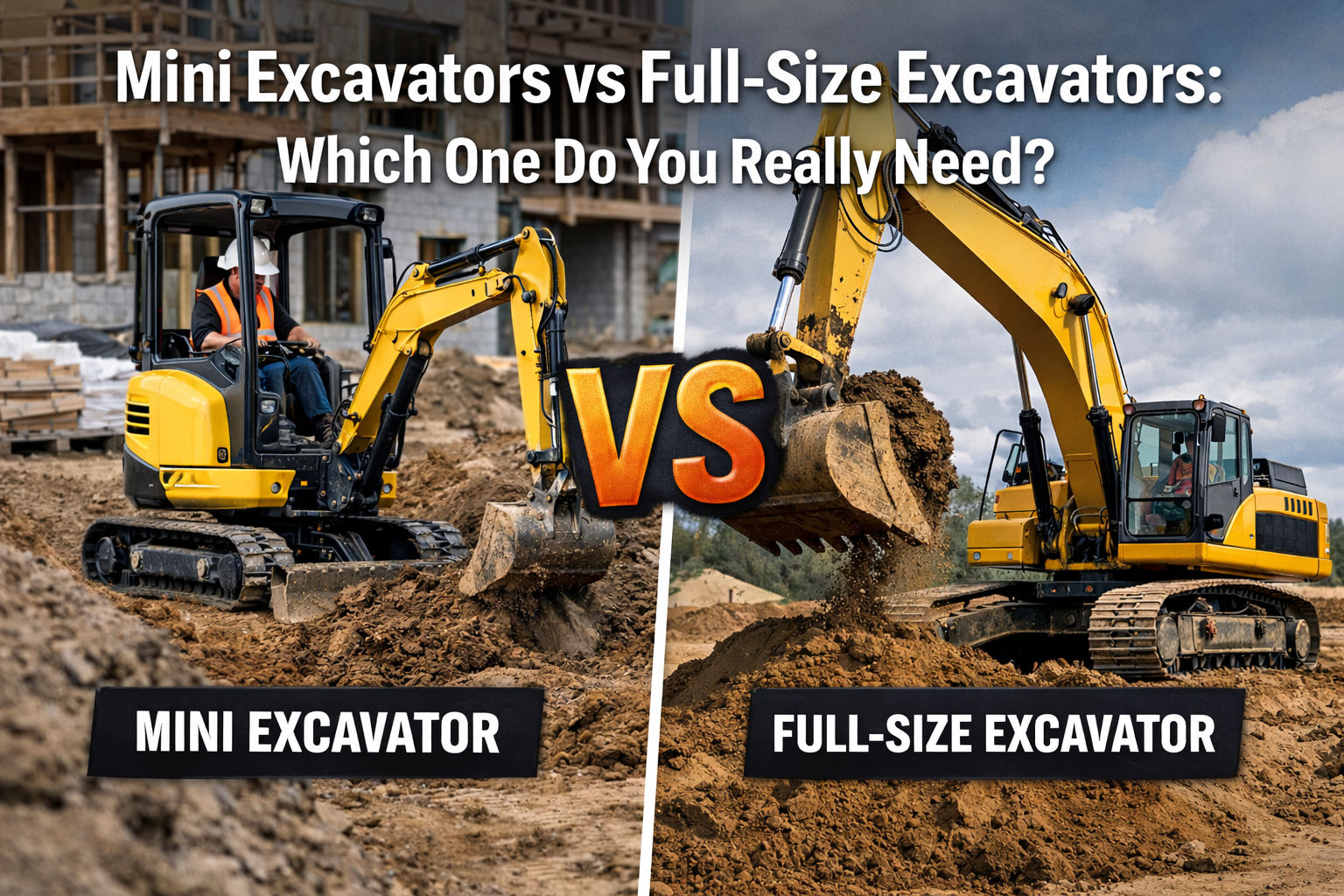
Mini Excavators vs Full-Size Excavators: Which One Do You Really Need?
Sona Construction Technologies Pvt Ltd
Apr 03, 2026
Read More
.png)
Types of Foundation in Construction: Isolated, Raft & Pile Explained
Sona Construction Technologies Pvt Ltd
Apr 01, 2026
Read More
.png)
Concrete Mix Ratio for Slab, Column & Footing – Complete Practical Guide with Detailed Explanation & Site Execution
Sona Construction Technologies Pvt Ltd
Mar 25, 2026
Read More
.png)
Civil Work Rate Analysis: Formula, Calculation, Examples & Latest Rates
Sona Construction Technologies Pvt Ltd
Mar 20, 2026
Read More








Copyright © 2026 Sona Construction Technologies Private Limited
 Power Trowel