
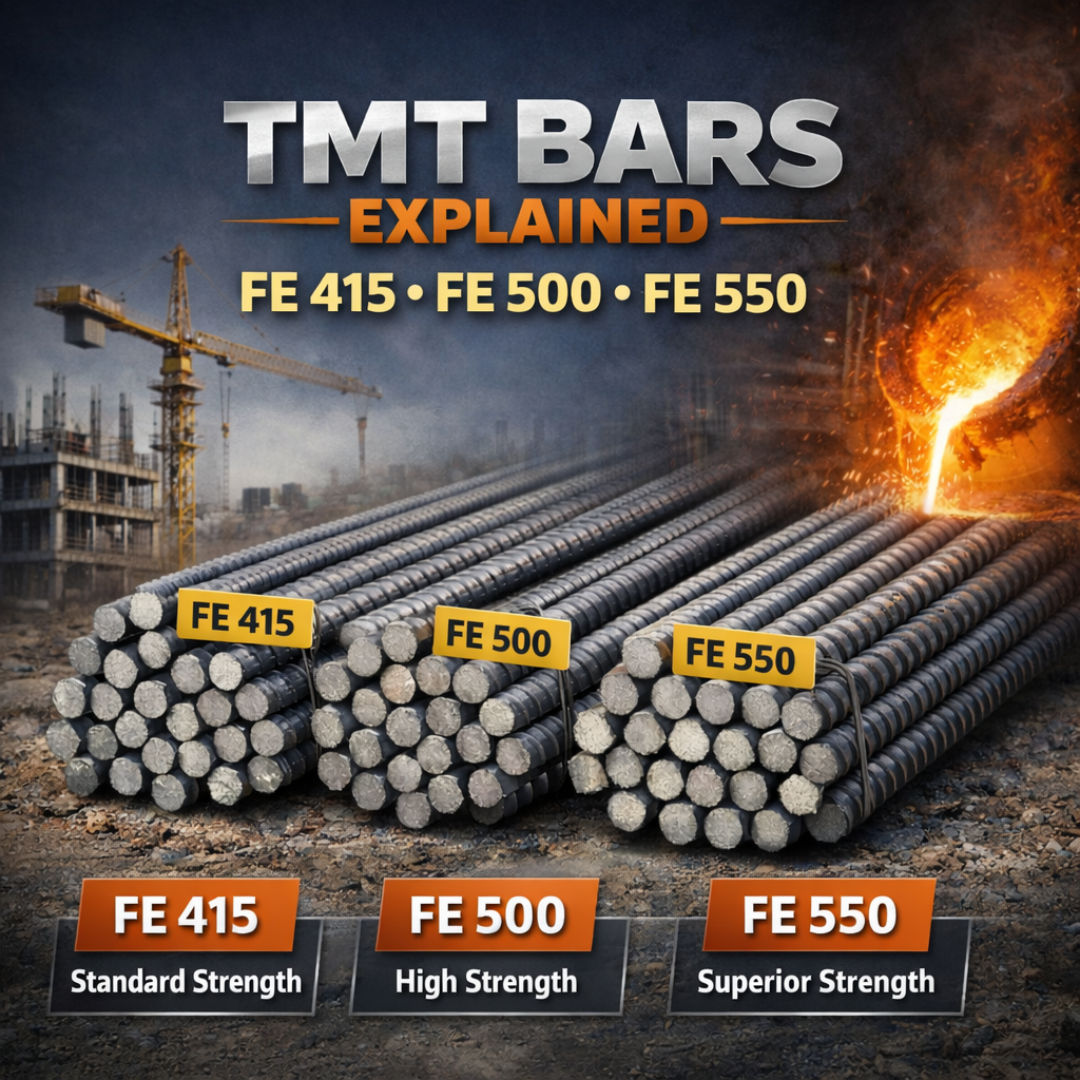
In modern construction, selecting the correct TMT bar grade is critical for structural safety, durability, and cost efficiency. Whether you are constructing a small residential house, a commercial building, or large infrastructure, understanding the difference between Fe 415, Fe 500, and Fe 550 TMT bars helps ensure the right reinforcement choice.Each grade represents a specific yield strength, and the right selection depends on structural design, load conditions, seismic zone, and project budget — not simply higher strength.
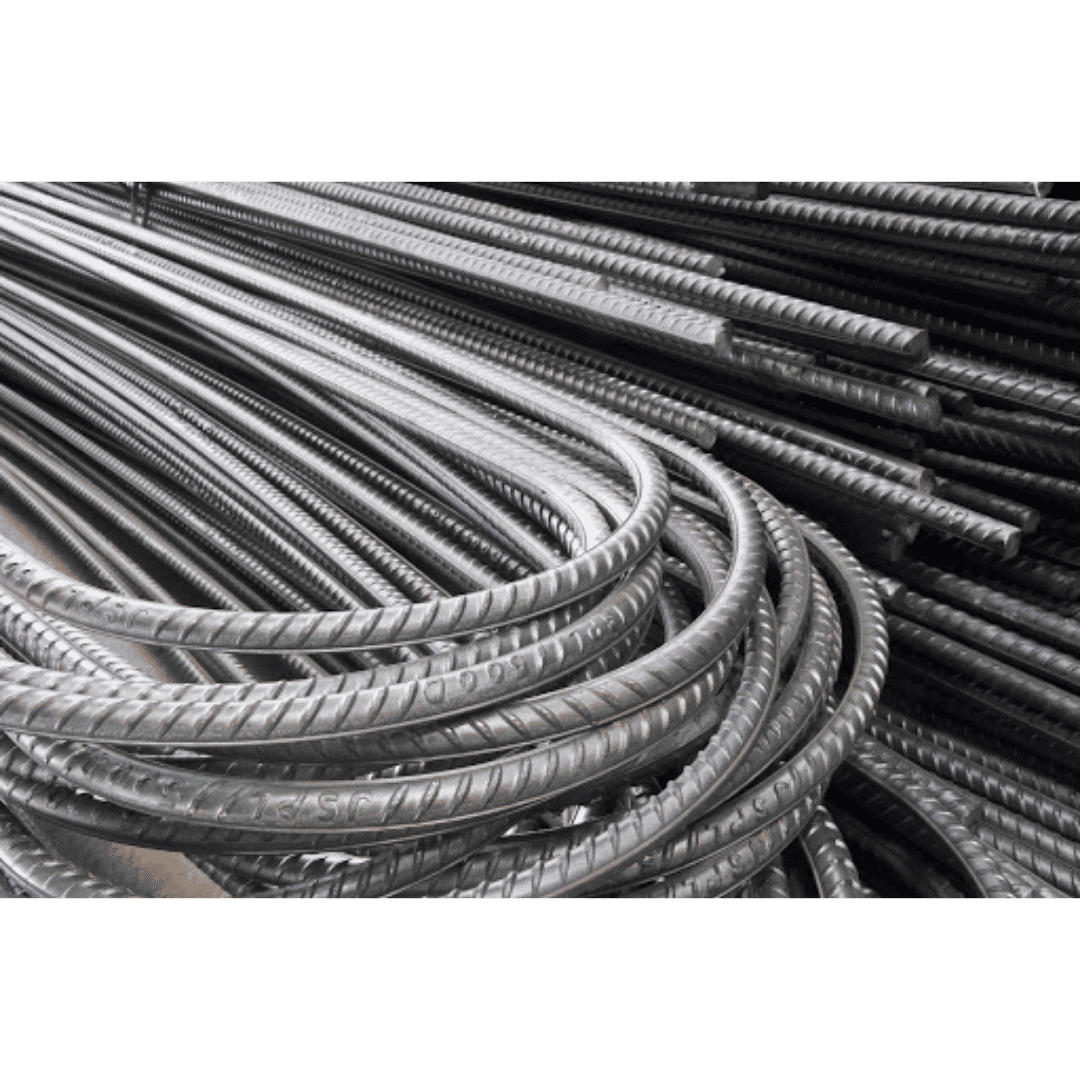
TMT stands for Thermo Mechanically Treated bars. These reinforcement steel bars are manufactured through a special heat treatment process in which:
This combination gives TMT bars:
Because of these properties, TMT bars are widely used in RCC (Reinforced Cement Concrete) structures.
“Fe” stands for Iron (Ferrum).
The number following Fe (415, 500, 550) indicates the minimum yield strength in N/mm².
Higher numbers indicate higher load-carrying capacity. However, the correct grade must match the structural design requirements.
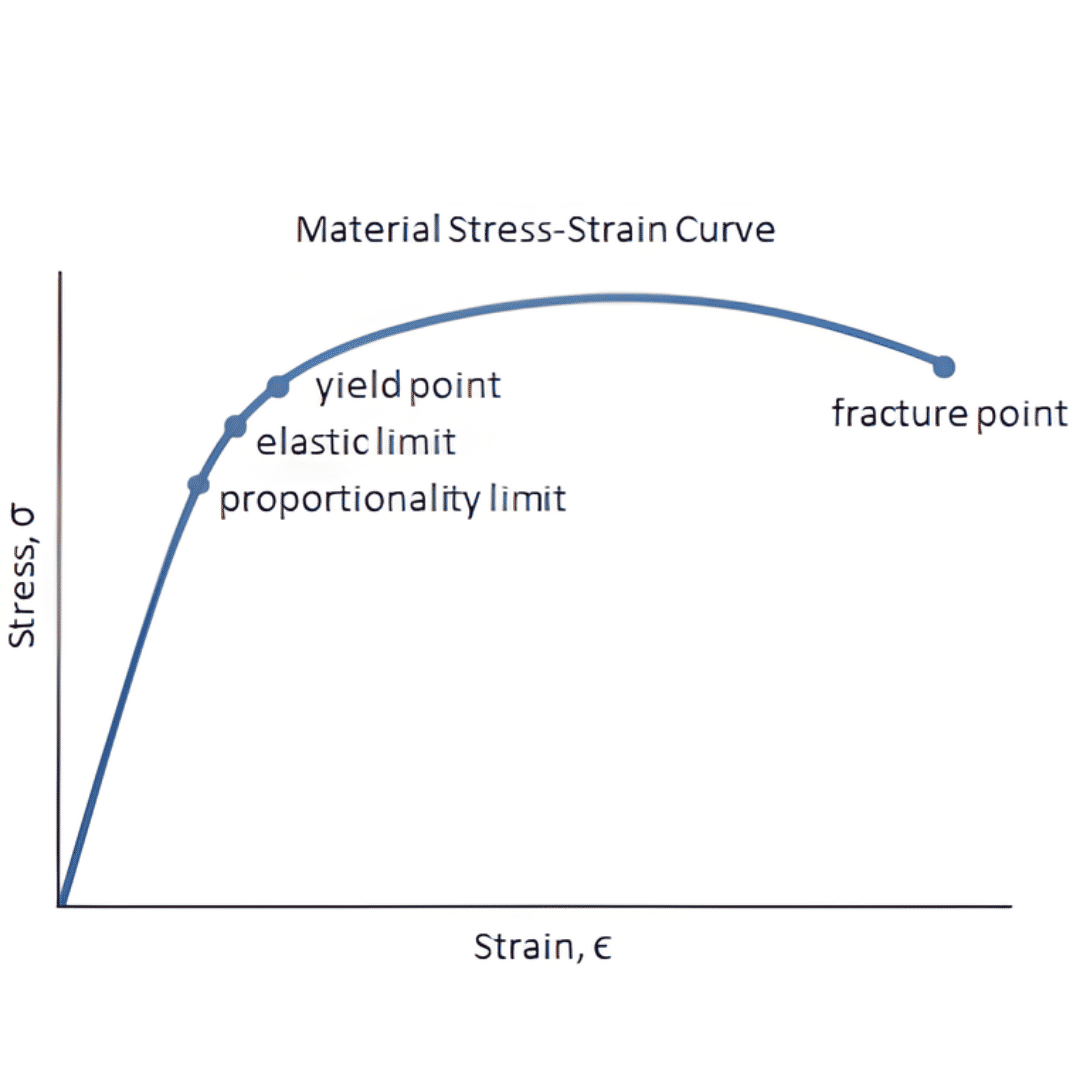
Yield strength is the stress level at which steel begins to deform permanently.
Below the yield point:
Above the yield point:
Yield strength determines:
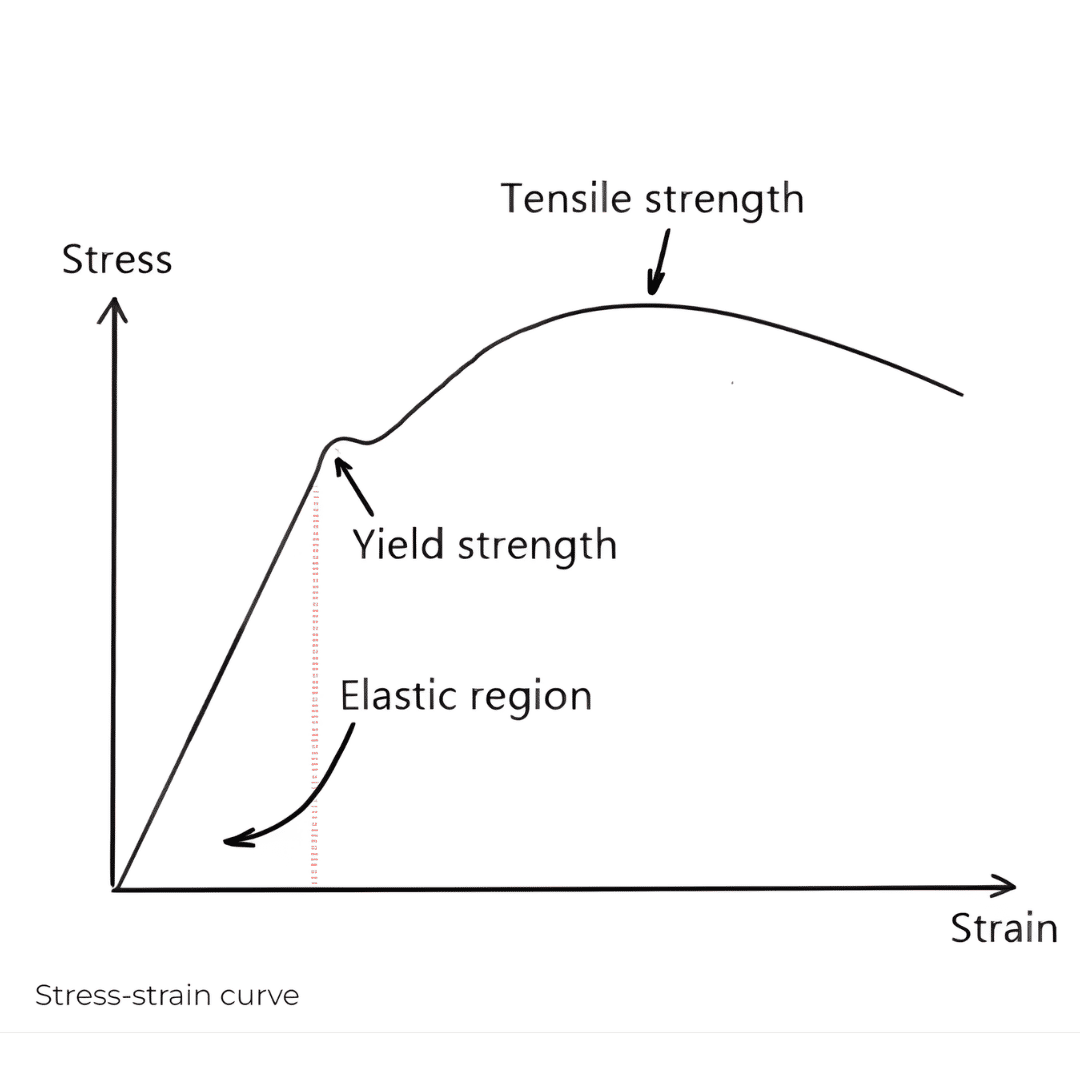
Tensile strength refers to the maximum stress steel can withstand before breaking. It provides:
Both yield strength and tensile strength are critical in structural engineering calculations.
| Grade | Yield Strength | Ductility | Suitable For |
|---|---|---|---|
| Fe 415 | 415 N/mm² | High | Small houses, low-rise buildings |
| Fe 500 | 500 N/mm² | Balanced | Residential & commercial projects |
| Fe 550 | 550 N/mm² | Lower than Fe 415 | High-rise & heavy infrastructure |
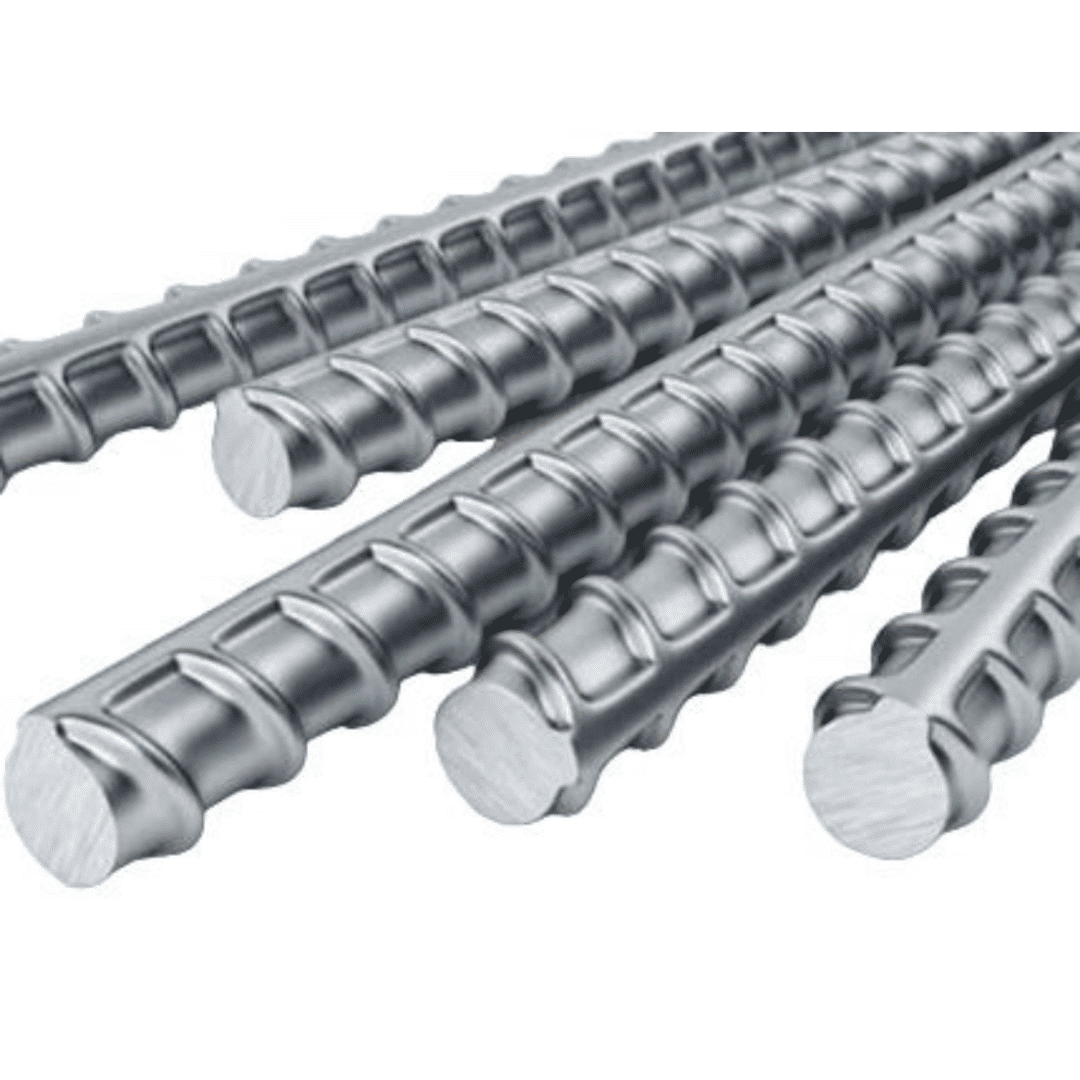
Fe 415 bars provide moderate strength with high ductility.
Key Features:
Applications:
Advantages:
Limitation:
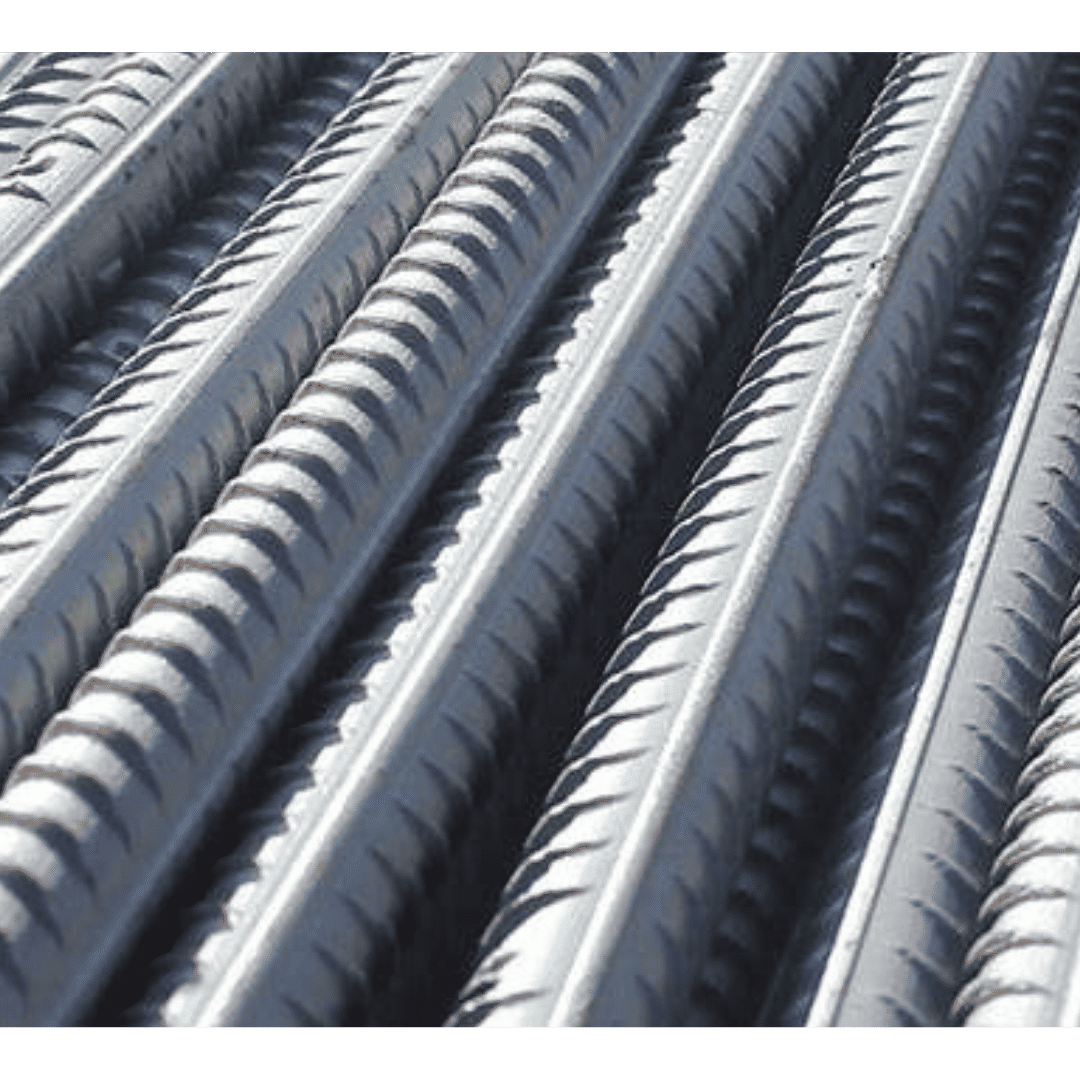
Fe 500 is the most widely used grade in modern construction.
Key Features:
Applications:
Advantages:
Limitation:
For most house construction projects, Fe 500 is considered the best TMT bar grade due to its strength-to-flexibility balance.
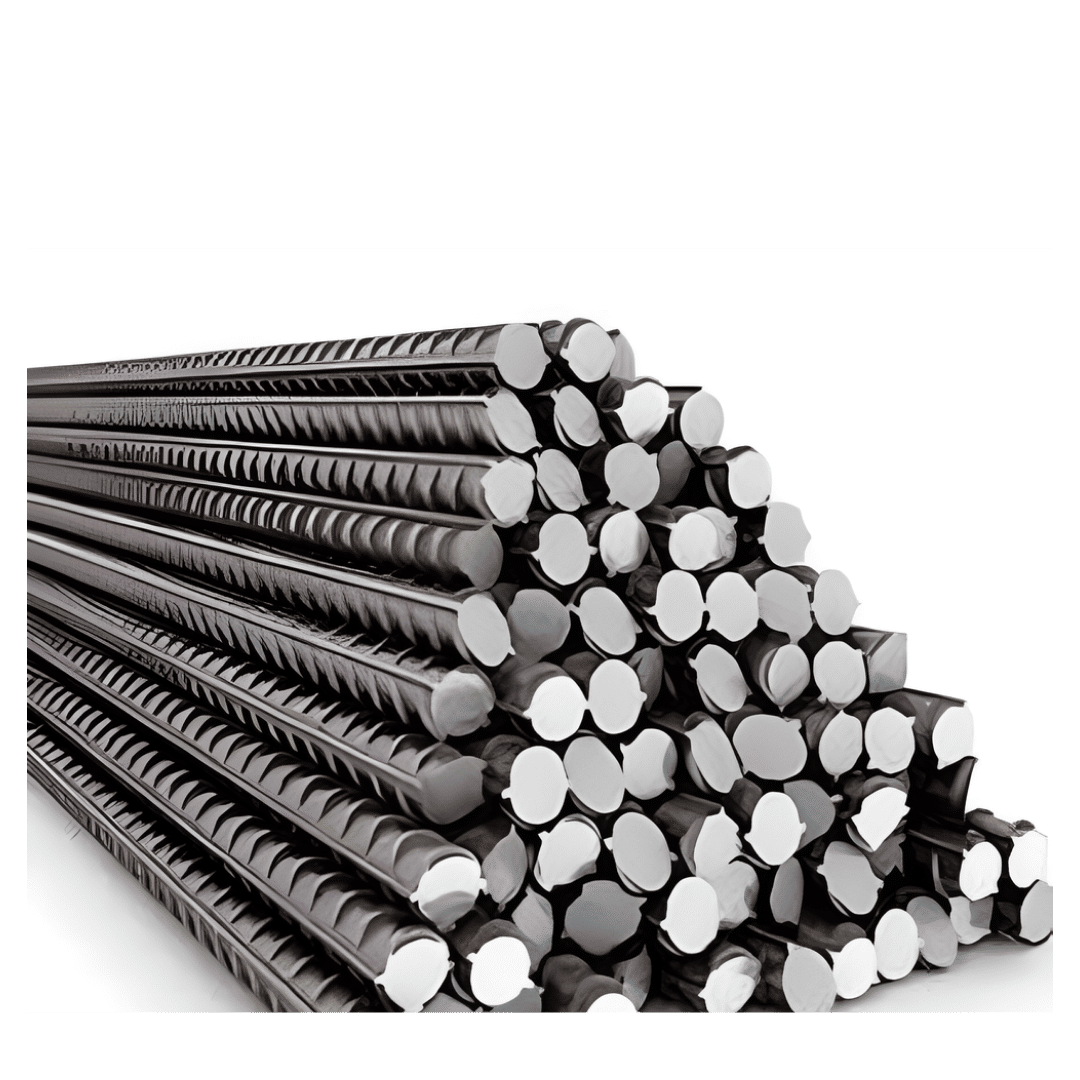
Fe 550 bars are high-strength reinforcement bars designed for demanding structural applications.
Key Features:
Applications:
Advantages:
Limitation:
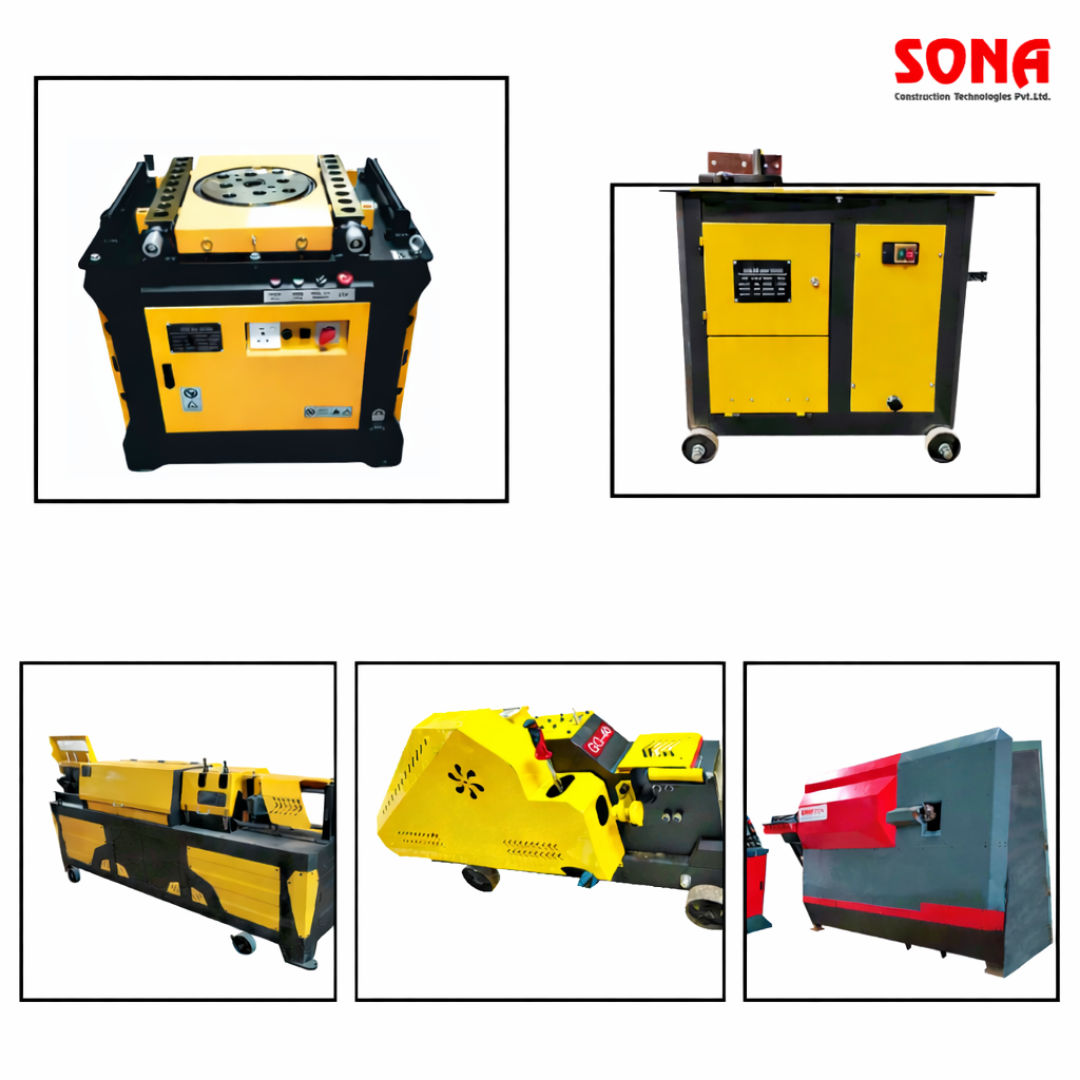
Selecting the correct TMT grade ensures strength — but proper cutting and bending accuracy ensures structural reliability.
In modern construction projects, reinforcement processing is carried out using advanced machinery such as:
Q1. What is the difference between Fe 415 and Fe 500?
Fe 500 has higher yield strength (500 N/mm²) compared to Fe 415 (415 N/mm²), allowing it to handle higher stress.
Q2. Which TMT grade is best for house construction?
Fe 500 is commonly recommended due to its balanced strength and ductility.
Q3. Can Fe 550 be used in residential buildings?
Yes, but it is typically not necessary unless specified by a structural engineer.
Q4. What does yield strength mean in TMT bars?
It is the stress level at which the steel begins to deform permanently.
Q5. Does higher grade mean better TMT bar?
Not always. The correct grade depends on structural requirements, not just higher strength.
Understanding the difference between Fe 415, Fe 500, and Fe 550 TMT bar grades is essential for safe and cost-effective construction. While Fe 415 offers higher ductility, Fe 500 provides balanced performance, and Fe 550 delivers superior load capacity, the right choice depends on project type and structural design.Equally important is precise reinforcement processing using machinery such as Bar Bending Machines, Bar Cutting Machines, Stirrup Making Machines, Ring Making Machines, and Decoiling Machines to maintain structural accuracy and long-term durability.
Soil vs Asphalt Compaction: 7 Practical Differences Every Site Engineer Should Know
.jpg?updatedAt=1792410435540)
Smarter Machines, Stronger Roads: How Mechanisation Is Rebuilding India’s Road Construction
.jpg?updatedAt=1792230595960)
₹12.2 Lakh Crore for Infrastructure: Which Construction Machines Will Be in Demand?
.png)
SONA at ACE TECH Bengaluru 2026: Construction Equipment Showcase Recap
.png)
Bar Bending Schedule (BBS) Using Excel in 2026

Copyright © 2026 Sona Construction Technologies Private Limited